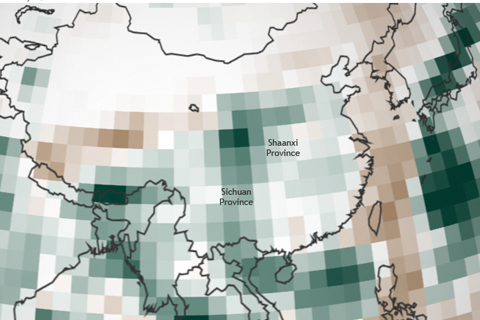
More than a week of torrential rain in mid-September 2011 caused deadly floods across Sichuan, Shannxi, and Henan provinces in China.
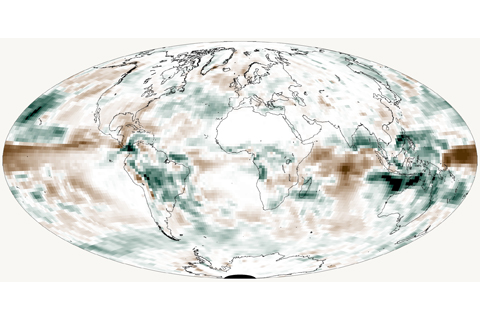
Seasonal precipitation patterns across the globe showed large differences from average in 2011, with several areas receiving heavy rains during more than one season of the La Niña-influenced year.
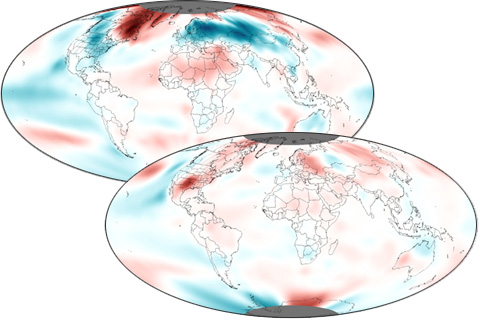
A year-long La Niña contributed to dramatic variability in seasonal temperature patterns in 2011.
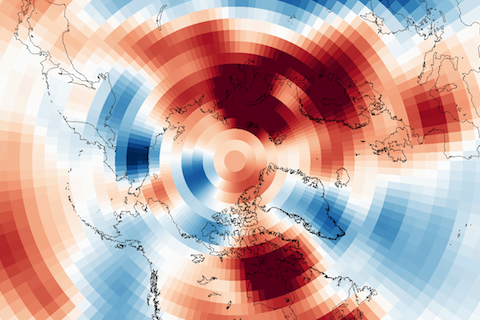
Climate forecasters often describe the Arctic Oscillation as the “wild card” of the winter forecast. So far in 2011, the Arctic Oscillation has been in its positive phase, playing the card that favors a milder winter in the eastern United States.
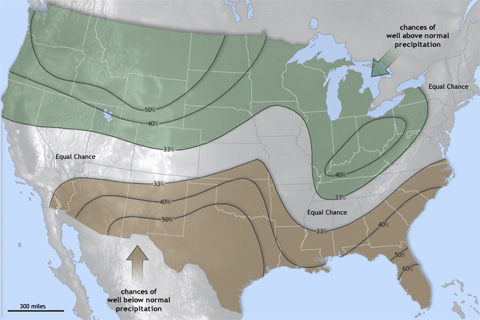
NOAA’s official Winter Outlook for 2011–2012 is unlikely to please many residents of either the still-soggy Missouri River Basin—which experienced historic flooding this past spring and summer—or the parched south-central United States, where severe to exceptional drought has been in place since spring.
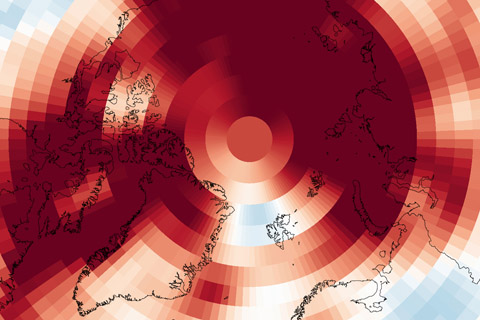
Continuing a decade-long phenomenon, above-average warmth in the Arctic this year was two or more times greater than warming observed at lower latitudes.
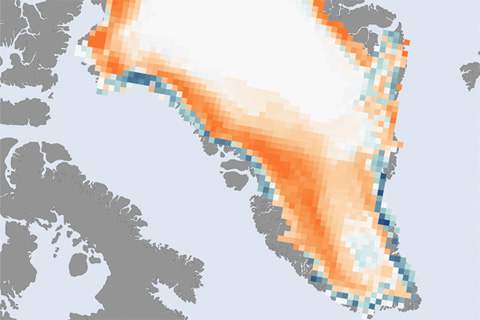
The surface melt season on Greenland lasted up to 30 days longer than average in 2011, and it affected 31 percent of the ice sheet surface. Ice mass loss from Greenland in 2011 was about 430 gigatons—enough ice to raise global sea level by just over 1 millimeter.
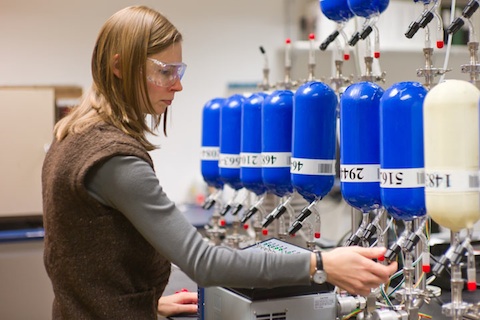
Molly Heller is part of a team of scientists who processes flasks of air samples in NOAA’s Earth System Research Laboratory in Boulder, CO. Week in and week out, Heller and her colleagues unpack sealed glass flasks shipped back to Boulder from dozens of remote sites around the world. What’s inside is priceless: air captured from a site near Tasmania’s Cape Grim; from Summit, Greenland; the Canary Islands; the South Pole.
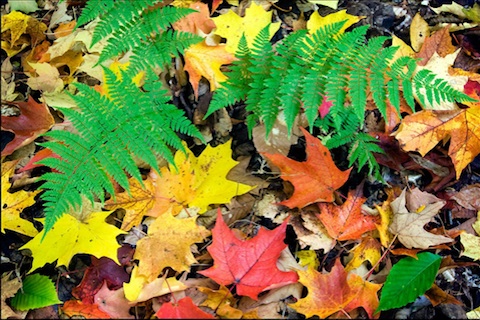
The types of tree species that grow in a particular region determine the range of bright colors that paint our landscapes during the fall season. In the future, scientists project that the forest habitats all around us may undergo major changes to due to warming temperatures.
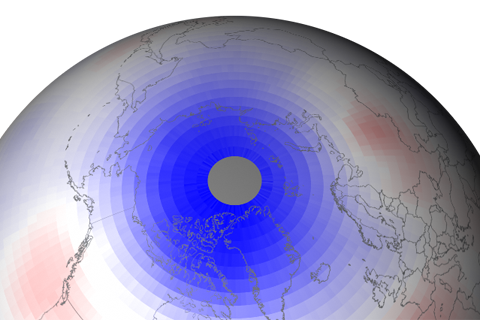
Compared to the large ozone hole that forms over Antarctica each year, Arctic ozone loss has generally been much more limited. But in 2011, Arctic ozone declined to surprisingly low levels. What did climate have to do with it?