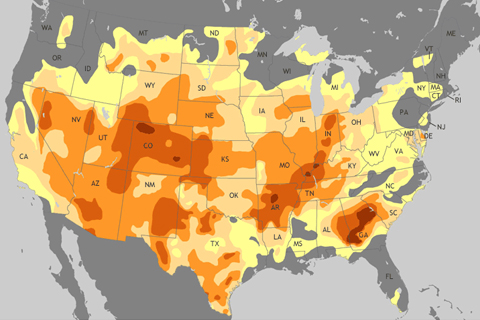
In early July 2012, conditions throughout most of the contiguous 48 states ranged from abnormally dry to exceptional drought.
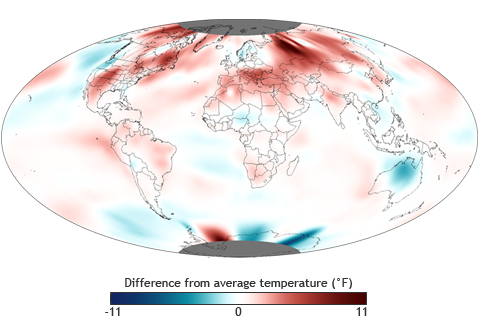
The average global temperature for June 2012 was the fourth highest for any June since record keeping began in 1880. Land-only surface temperatures were the highest on record for the month. June 2012 also marks the 36th consecutive June and 328th consecutive month with a global temperature above the twentieth-century average. The last June with below-average global temperatures was June 1976.
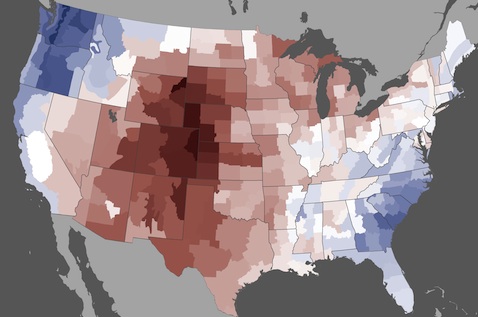
Scorching temperatures during the second half of June 2012 broke or tied over 170 all-time temperature records in cities across America.
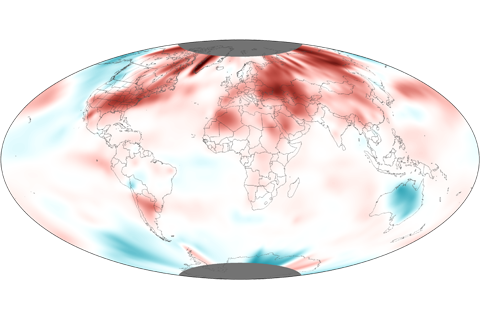
The average global temperature (land and ocean) for May 2012 was the second warmest May temperature since recordkeeping began in 1880, and the temperature over land surfaces was the warmest on record for May. May 2012 also marks the 327th consecutive month with a global temperature above the 20th-century average.
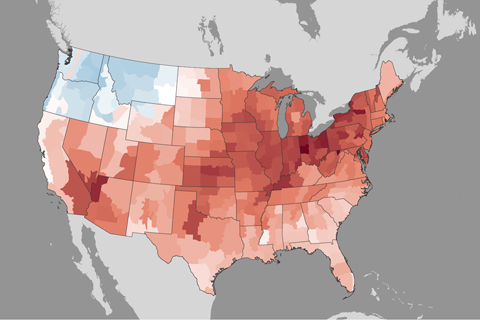
The average temperature for the United States during May was more than 3 degrees F above the long-term average, making it the second warmest May on record. The month's high temperatures also contributed to the warmest spring, warmest year-to-date, and warmest 12-month period the nation has ever experienced since record keeping began in 1895.
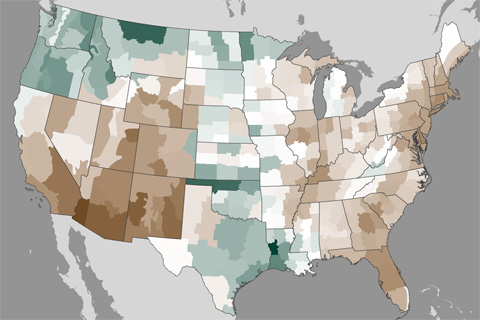
Since the beginning of 2012, the contiguous United States has been experiencing drier than average conditions. This lack of precipitation is affecting water availability for agriculture and municipal use, as well as increasing concerns about soil quality and wildfires.
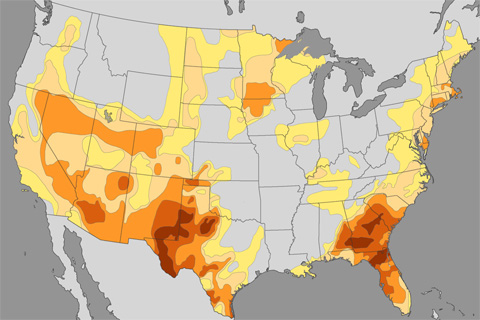
After a record-breaking drought last summer, dry conditions continue to linger in large portions of the South this spring.
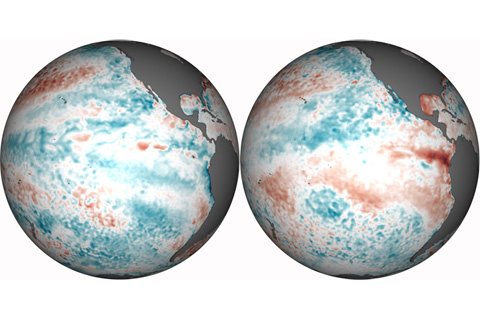
Temperatures in the eastern tropical Pacific Ocean swing back and forth like an irregular pendulum. The cool phase—which the Pacific has been in for the past two winters—is called La Niña. According to NOAA’s April 2012 ENSO Diagnostics Discussion, La Niña is fading and will likely be over by the end of April.
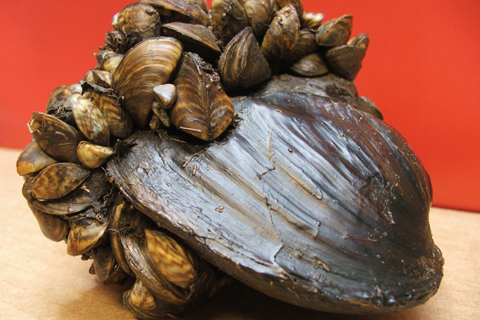
In the Great Lakes region, conservation and resource managers are already fending off attacks by multiple invasive species. In the future, climate change will present new challenges, such as anticipating the invaders’ next move and dealing with new, emerging threats — some of which could be swimming around in your aquarium right now.
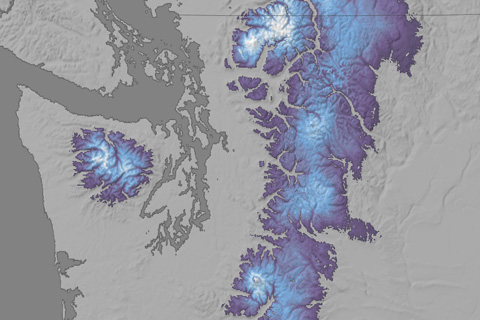
In the first two weeks of March, a series of storms piled between 4 and 9 feet of new snow on the already deep powder on the western slopes of the Cascades.