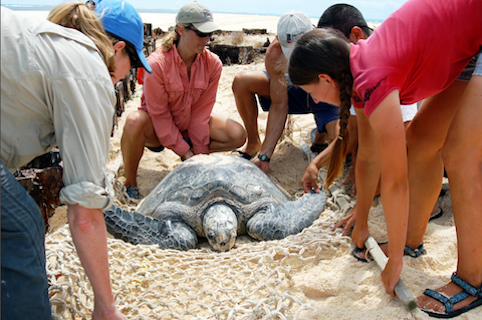
Many of the Northwestern Hawaiian islands where sea turtles nest have low, flat coastal plains. They are already vulnerable to storm surges, and they could be totally inundated as sea level rises.
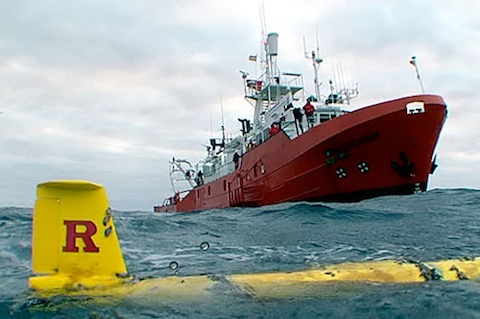
The “Scarlet Knight” becomes the first unmanned underwater glider to successfully cross the Atlantic. The technology promises to improve our understanding of the ocean and its role in climate and weather.
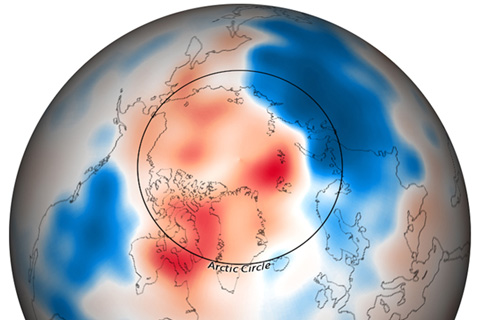
A wave of cold Arctic air gripped much of North America, Europe, and northern portions of Asia through the month of December 2009.
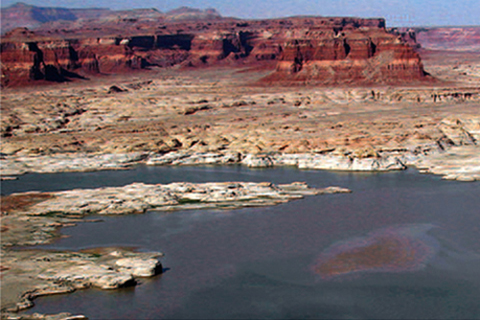
Two photographs, taken 18 months apart, show a significant decrease in Lake Powell during the most serious period of recent drought.
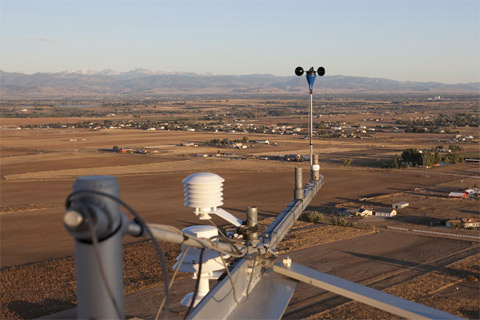
Instruments located high atop NOAA’s Boulder Atmospheric Observatory tower help scientists track carbon emissions and air quality in Colorado.
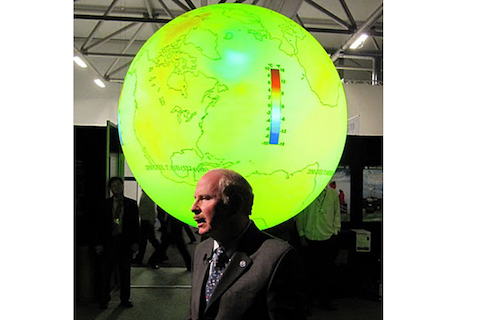
At the United Nations Climate Change Conference, Dr. Alexander E. “Sandy” MacDonald, of NOAA, used Science on a Sphere® to illustrate how climate change will transform the planet if humans do not reduce emissions of greenhouse gases.
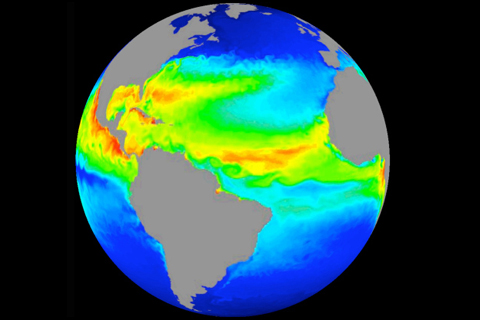
Improved computer models help scientists understand Earth’s ocean.
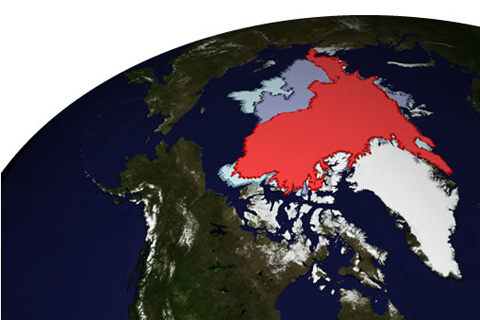
On September 12, the extent of sea ice in the Arctic reached the third lowest level ever recorded since satellite records began in 1979. Only 2007 and 2008 have had smaller ice extents than 2009.
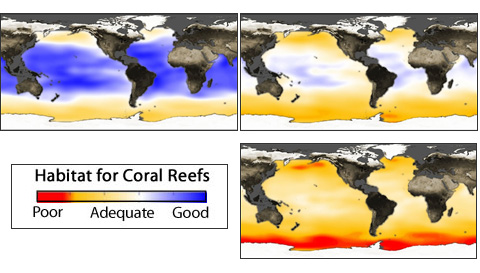
As the ocean absorbs atmospheric carbon dioxide, the pH of the water drops. The more acidic water harms corals and other shell-building sea life.
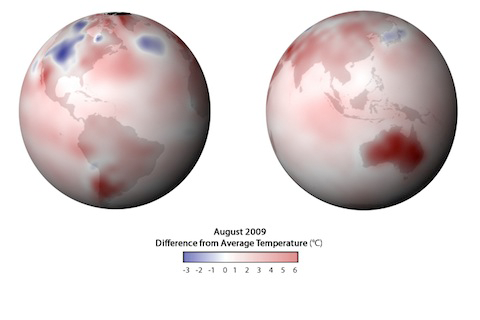
Global land and sea surface temperatures in August 2009 broke several records. The world’s ocean surface temperature was the warmest for any August on record.