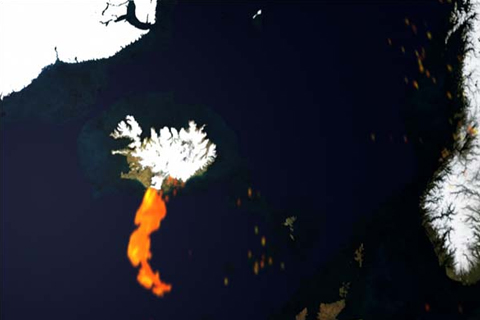
Iceland’s Eyjafjallajökull Volcano roared to life on April 14, 2010, injecting billowing clouds of steam and volcanic ash into the atmosphere.
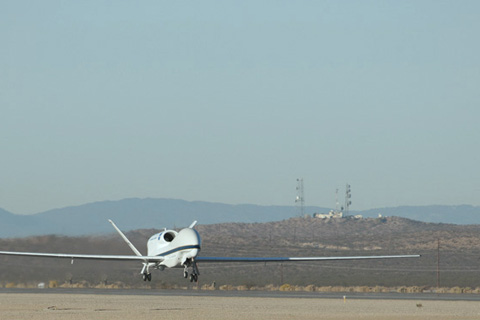
The Global Hawk research aircraft soars to hard-to-reach areas of the atmosphere to collect samples of trace gases and chemicals. Find out just how high the Global Hawk flies.
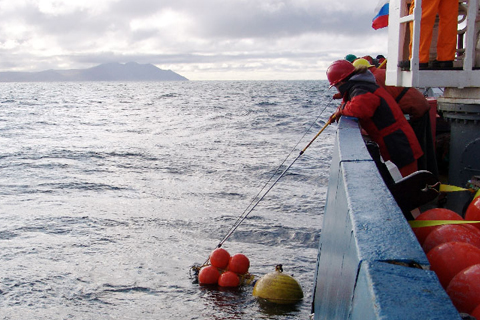
In the summer of 2009, sea ice receded to its third-smallest area in recorded history. The reduced sea ice cover in the Arctic allowed an international group of scientists to study areas of the ocean that they have never been able to reach before.
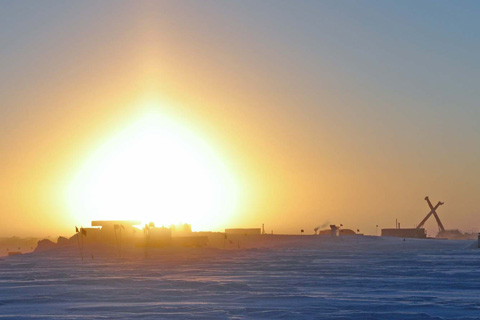
As the sun sinks below the horizon at the South Pole, NOAA researchers stationed at the bottom of the world settle in for six months of darkness. Throughout the Antarctic winter, the researchers will collect air samples to help maintain long-term records of trace gases, aerosols, and solar radiation.
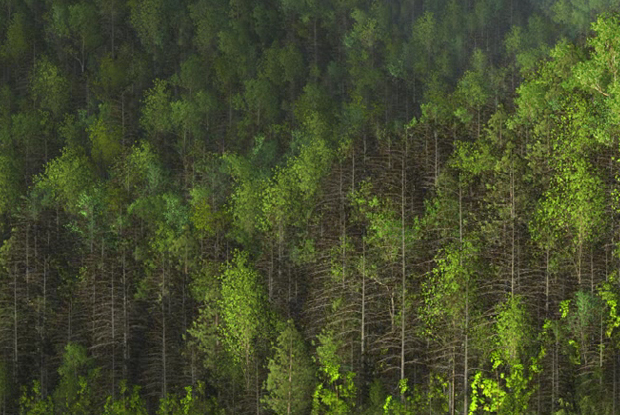
Watch what happens when an invasive insect takes its toll on eastern hemlock trees in the Southern Appalachian Mountains.
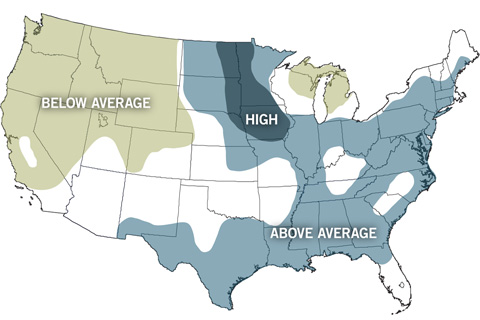
Across the contiguous United States, more than a third of the land has an above-average risk of flooding this spring, according to an announcement issued on March 15 by NOAA’s National Weather Service.
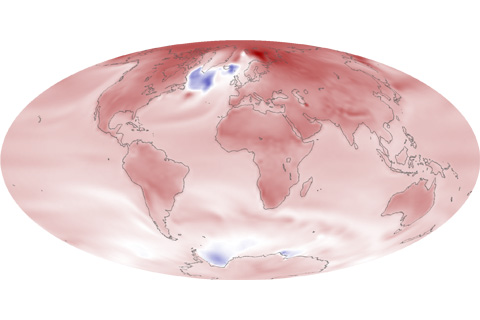
Global climate models project that near the end of the 21st century, average surface temperature over most of Earth’s surface will be several degrees warmer than today, mainly due to rising levels of greenhouse gases in the atmosphere.

Despite efforts to reduce emissions of a HFC-23, a potent greenhouse gas, research shows that concentrations of the compound have increased in recent years.
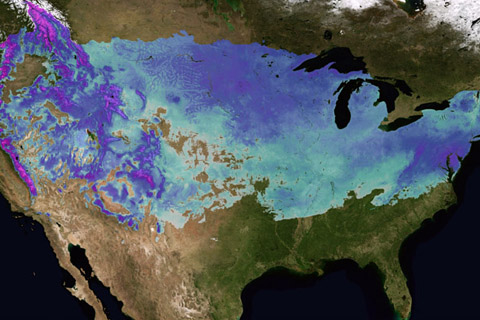
In early February, two weather systems brought record snowfalls to Washington, D.C., and other parts of the U.S. mid-Atlantic region. At the same time, organizers of the 2010 Winter Olympics in British Columbia, Canada, were dealing with a deficit of snow.
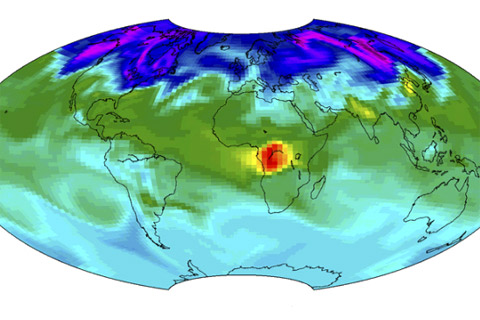
From the African savanna to North America’s boreal forests, NOAA’s CarbonTracker tool provides insight into what natural and human processes affect the uptake, release, and transport of carbon dioxide in Earth’s lower atmosphere.