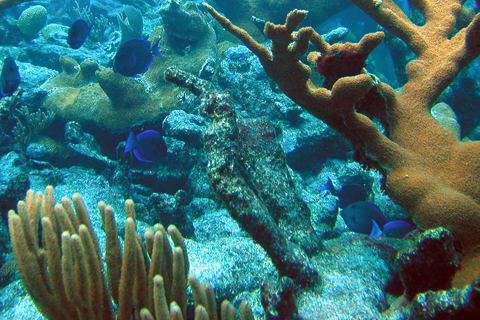
Coral reefs are important and productive ocean ecosystems, providing shelter and protection for diverse sea life. NOAA's latest seasonal outlook for coral bleaching shows potential for bleaching along the Pacific coast of Mexico and islands in the equatorial central Pacific Ocean.
March 2025 temperatures for the contiguous U.S. were the sixth-warmest in the 131-year record. Precipitation ranked in the middle third of the historical record.
Released in 2023, the Fifth National Climate Assessment (NCA5)'s Art × Climate gallery encourages people to engage with climate in a new way. This youth entry by Diya P. showcases natural beauty in the desert Southwest.
Released in 2023, the Fifth National Climate Assessment (NCA5)'s Art × Climate gallery encourages people to engage with climate in a new way. This work by Jillian Pelto captures mitigation efforts.
Temperatures were above average over much of the globe, particularly in the Arctic, but much below average over western Canada and the central United States.
Winter was warm and dry for the contiguous U.S.; seasonal snowfall was below average across the Northern Plains and Upper Midwest.
Released in 2023, the Fifth National Climate Assessment (NCA5)'s Art × Climate gallery encourages people to engage with climate in a new way. This work by Diane Burke captures changes in Grinnell Glacier.
Released in 2023, the Fifth National Climate Assessment (NCA5)'s Art × Climate gallery encourages people to engage with climate in a new way. This work by Meredith Nemirov imagines a Colorado landscape with abundant water and resilience to drought.
The northwestern United States (including the states of Washington, Oregon, and Idaho) is home to nearly 14 million Americans. The region's diverse landscapes and inhabitants are variously affected by changing climate.
January 2025 was the coldest January since 1988 and sixth driest on record for the nation.