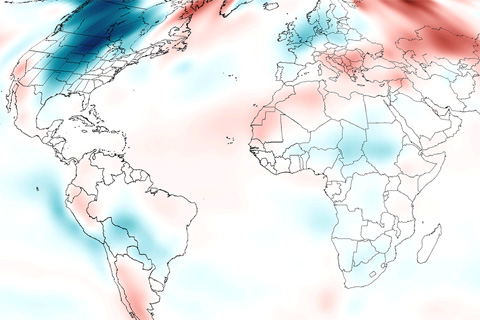
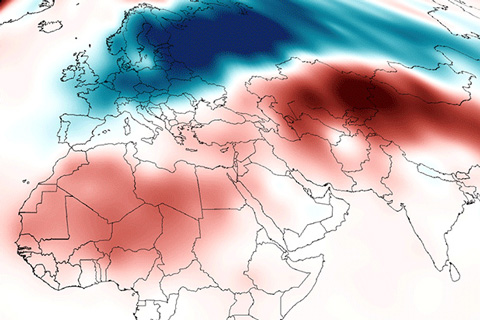
The average global temperature for April 2013 was the 13th highest on record for April at 57.64° Fahrenheit. It also marked the 37th consecutive April and 339th consecutive month (more than 28 years) with a global temperature above the 20th century average. The last below-average April temperature was April 1976 and the last below-average temperature for any month was February 1985.
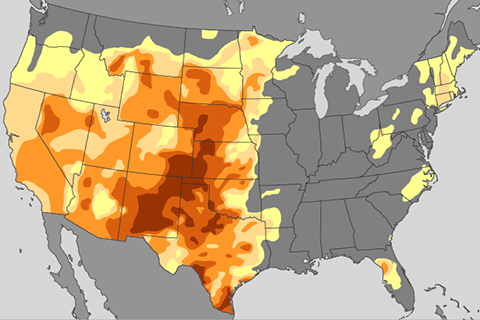
Drought status in the contiguous United States on May 14, 2013.
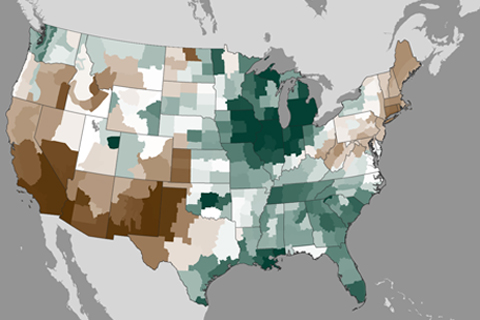
April showers and cool temperatures brought drought relief to many areas across the United States, but conditions worsened in the Southwest.

Every year, 25-35 square miles of land off the coast of Louisiana—an area larger than Manhattan–disappears into the water due to a combination of subsidence (soil settling) and global sea level rise. Toggle these maps back and forth to see how much land has been lost to the Gulf of Mexico in the past 80 years.
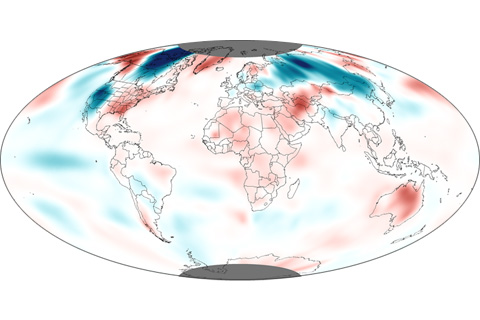
January 2013 was the 37th consecutive January and 335th consecutive month with a global temperature above the 20th-century average. The last below-average January was in 1976.
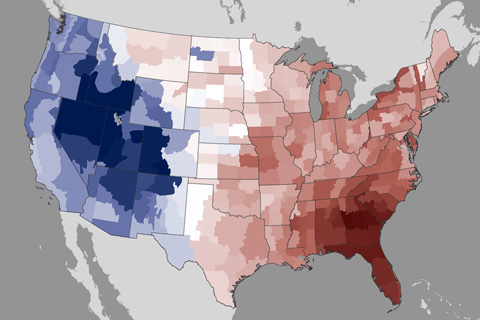
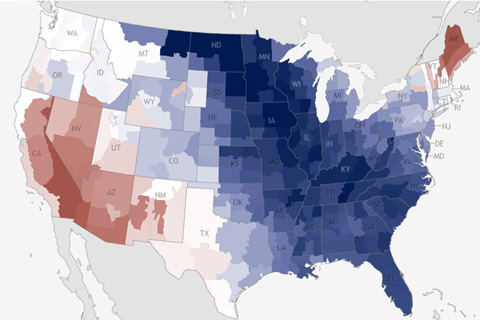
Despite several snowstorms associated with cold-air outbreaks, average January temperatures across the contiguous United States weren’t especially cold according to the latest statistics from NOAA’s National Climatic Data Center. Although the average temperature was spot-on freezing—32.0° Fahrenheit—that was still 1.6° Fahrenheit warmer than the twentieth-century January average.
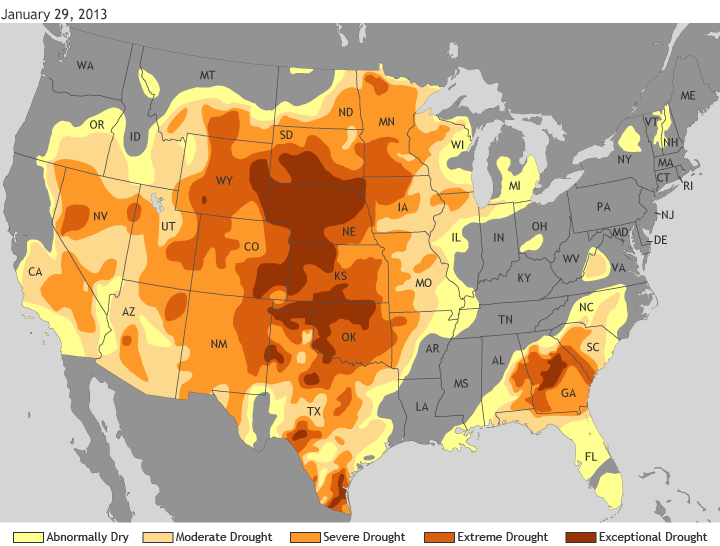
According to the U.S. Drought Monitor, an estimated 58 percent of the contiguous United States was in some level of drought as of January 29, with an additional 12 percent in the “Abnormally dry” category.
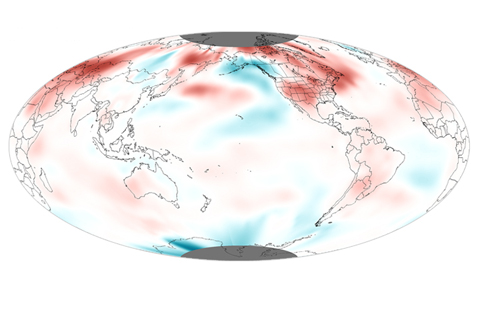
Although 2012 warmth did not top the charts, it was the third warmest “La Niña year” on record.