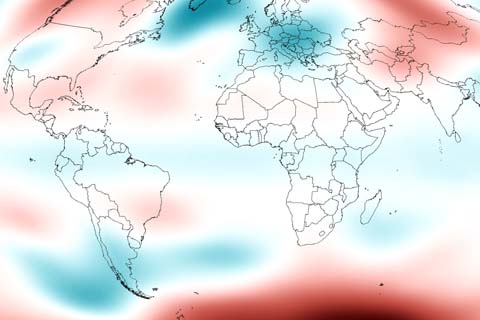
Observing temperature patterns in the lower stratosphere—second major layer of the atmosphere—gives scientists clues about our planet’s changing climate.
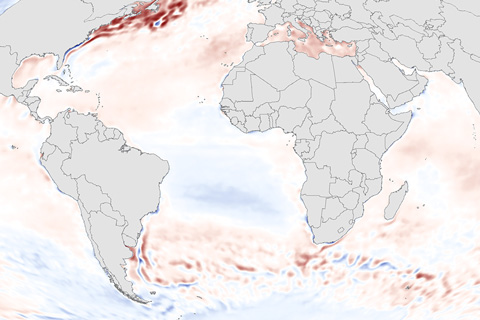
Sea surface temperature—the average temperature of water at the surface of the global ocean—is a key indicator of the ocean's status.
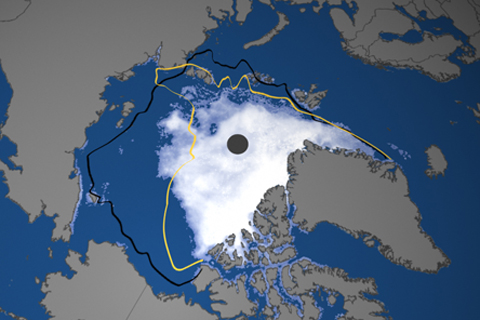
In 2012, sea ice melted to a record-breaking minimum extent. At the end of the summer melt season, ice covered only about half of the average area it did from 1979–2000.
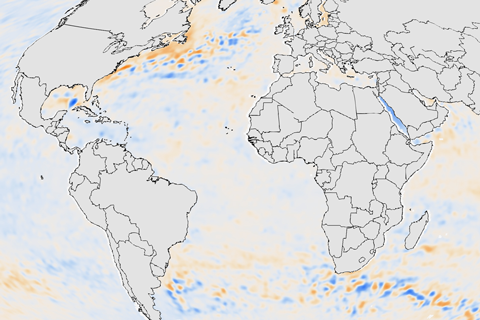
The ocean’s ability to store and release heat over long periods of time gives it a central role in stabilizing Earth’s climate system. But when the ocean absorbs more heat than it releases, its heat content increases. Warming causes water to expand, raising global sea level. Higher water temperatures can also threaten marine ecosystems, disrupting fisheries and the people who depend upon them. The upper ocean held more heat than average in 2012 in most of the major ocean basins, with the exception of the Pacific Ocean.
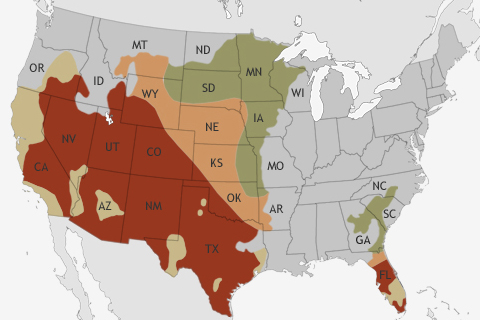
NOAA's Climate Prediction Center released its Spring Outlook on March 21. The big story for the upcoming spring? Relief for many drought-stricken areas of the United States is not likely.
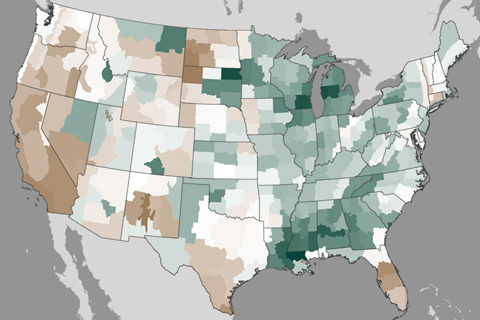
Winter storms in February improved drought in the Southeast and Midwest, but well below average precipitation in parts of the West in recent months has worsened drought in other places.
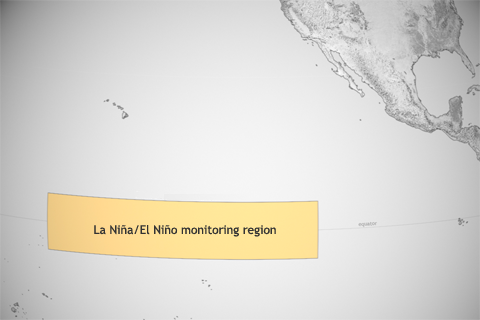
As the whole ocean gets warmer, NOAA scientists must redefine what they consider “average” temperature in the central tropical Pacific, where they keep watch for El Niño and La Niña.
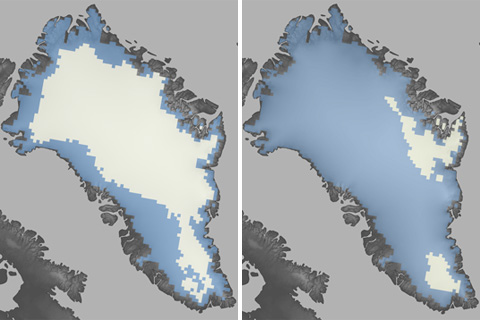
The summer of 2012 brought Greenland far more extensive melt than anything observed in the satellite record: in July 2012, surface melt extended over nearly the entire ice sheet. The standardized melt index was nearly double the previous record.
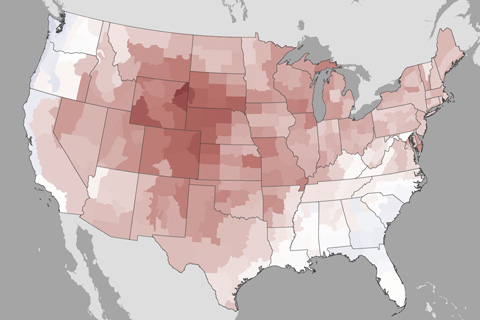
A scorching July contributed to the third hottest summer on record for the contiguous United States. Most of the U.S. was also drier than average. Rains from Isaac did little to relieve drought.
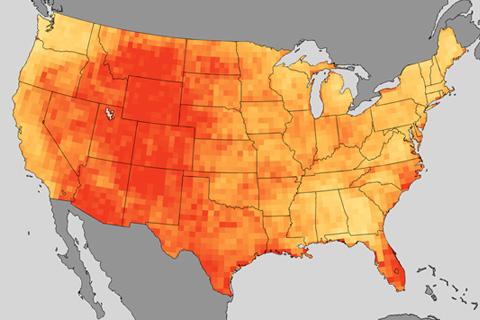
Imagine heat waves like the one last July coming more often & lasting longer: that’s the projection from climate models for the middle of this century based on one future emissions path.