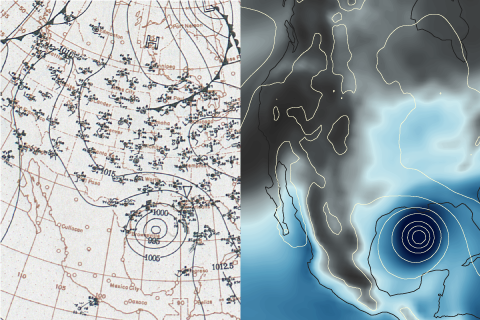
Generated by feeding historic weather observations into a modern computer forecast model, a new NOAA-funded dataset is like a time machine that reconstructs a detailed picture of the global weather every day back to 1836.
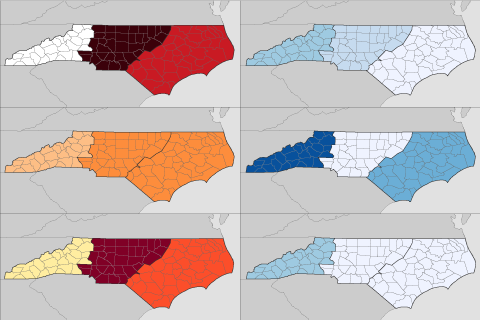
Women from states in the U.S. Southeast have the highest rates of premature deliveries in the country. Extreme heat plays a role.
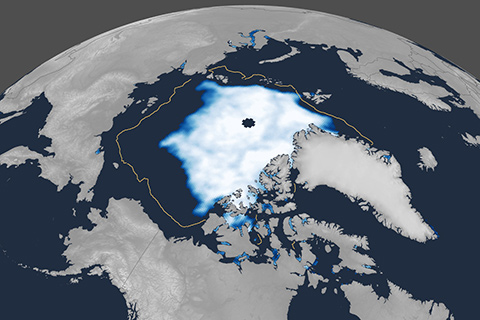
In 2019, the area of the Arctic Ocean where the summer sea ice cover was at least 15 percent tied with 2007 and 2016 as the second-smallest on record.
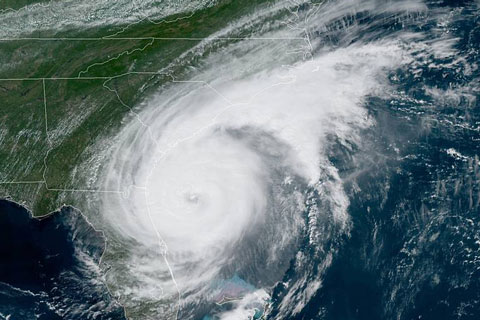
A collection of links to the latest NOAA updates on Hurricane Dorian.
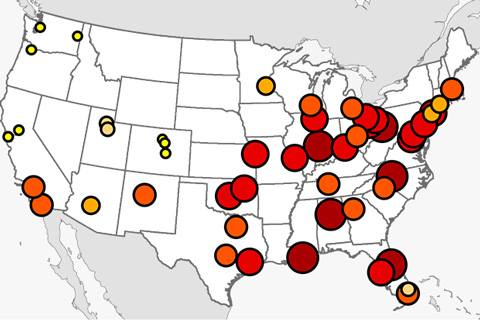
From extreme heat to infectious diseases, the impacts of human-caused global warming are a threat to human lives. According to the latest National Climate Assessment, thousands of lives could be saved in the U.S. by reducing greenhouse gases and improving resilience to climate change.
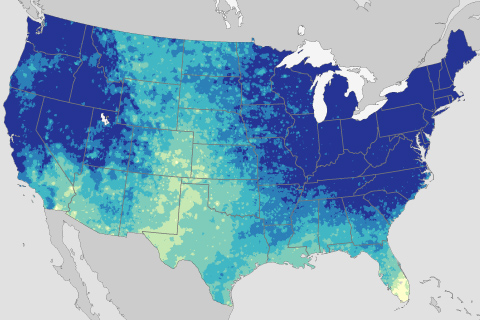
Extreme precipitation events have grown more frequent since the start of the twentieth century, and such events are likely to become even more frequent over the twenty-first.
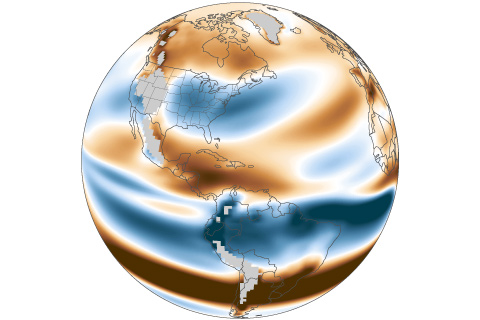
During active hurricane eras, a persistent zone of high vertical wind shear along the U.S. East Coast provides protection from rapidly intensifying hurricanes. With high emissions, that shear is projected to relax.
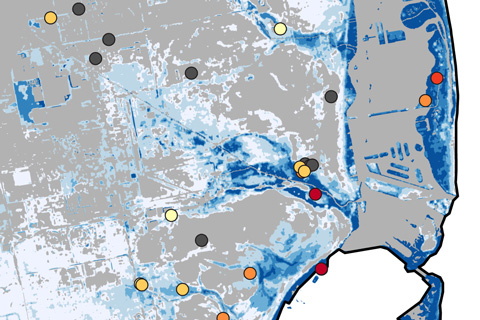
Hurricanes can harm people not just by causing injuries, but also by flooding hospitals that would otherwise deliver needed treatment.
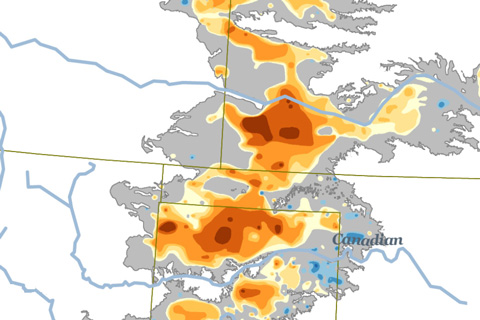
The Ogallala Aquifer has supported agricultural needs in multiple states for decades, but the aquifer is being drained faster than it is being replenished.
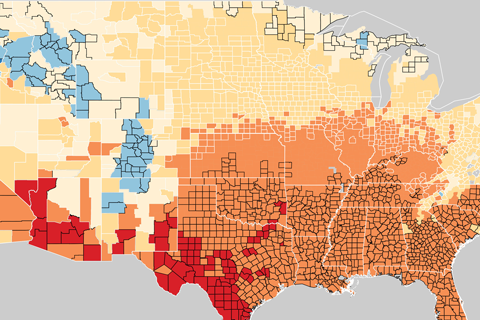
National Climate Assessment map shows uneven impact of future global warming on U.S. energy spending
If the world continues to follow a path with high greenhouse gas emissions, U.S. energy expenditures are projected to increase across much of the Lower 48.