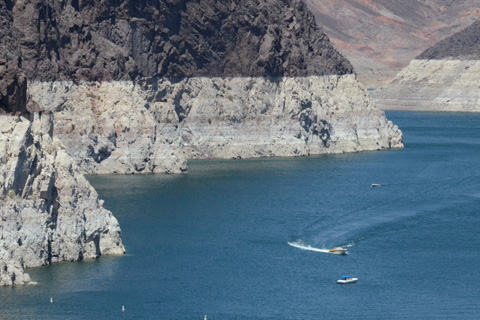
On July 11, Lake Mead reached its lowest water level since construction of the Hoover Dam in the 1930s. Many scientists are concerned that the prolonged drought could be a sign that the region will face significant water supply challenges due to climate change.
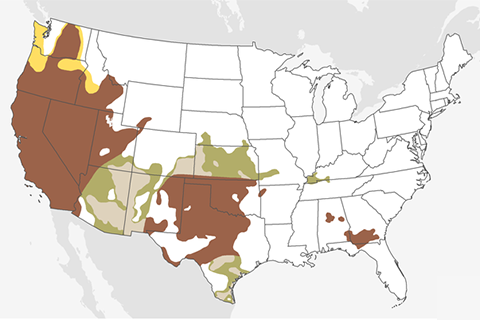
Drought in the far West and the southern portion of the Great Plains—regions that are already experiencing extreme and exceptional drought—will likely continue or worsen through September.
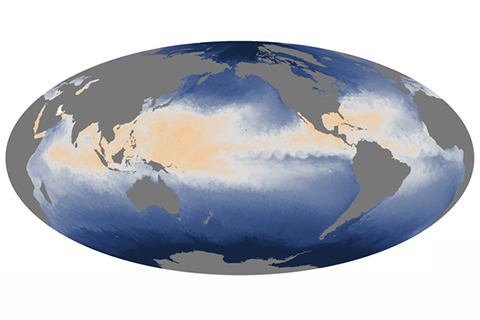
More than halfway through August, the Atlantic Ocean has seen just two named storms. Despite the availability of heat energy at the sea's surface, atmospheric conditions have not been favorable for storm development.
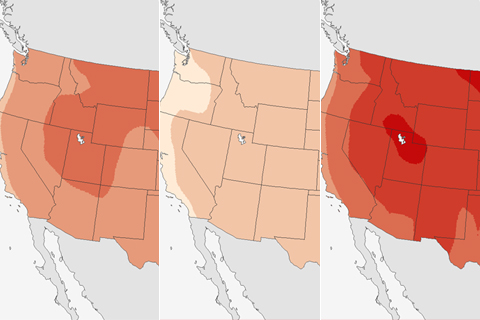
Despite uncertainties around future precipitation change, it is clear that as temperatures rise in Colorado, the state is expected to face significant challenges to managing water resources, according to a new report.
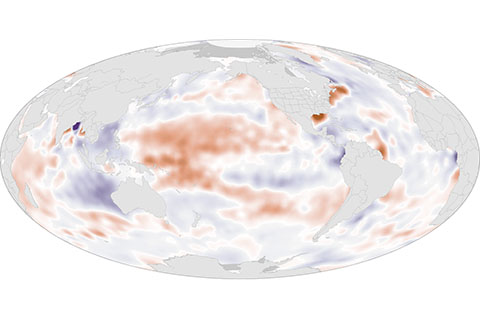
Across the globe, changes in salinity over time generally match changes in precipitation: places where rainfall declines become saltier, while places where rainfall increases become fresher. Where did saltiness change over the past decade?
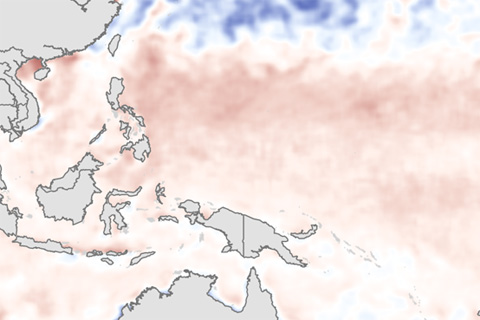
Through June, the eastern Pacific was warmer than average, but the lack of a strong gradient in sea surface temperature anomalies between the eastern and western Pacific may have kept the atmosphere from getting in sync with the developing El Niño.
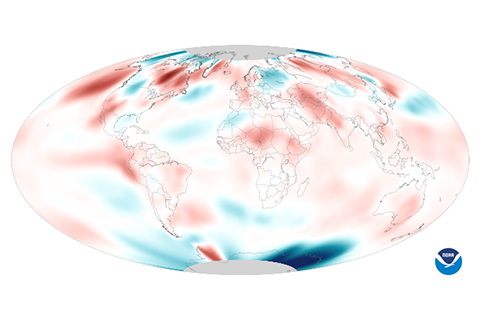
Hot on the heels of a new record set in May, average global temperature also reached a record high in June 2014.
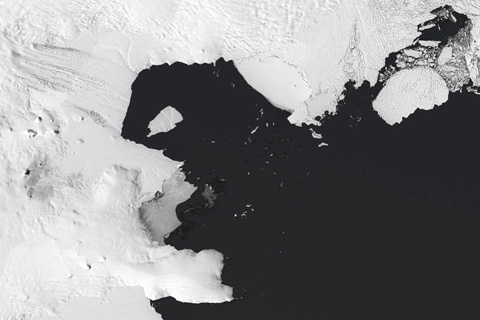
Why on Earth are climate scientists so interested in the West Antarctic ice sheet? This remote region of the seventh continent has been the subject of many recent research explorations--the results of which have been described in the news with words like “collapse,” “irreversible,” and “huge.”
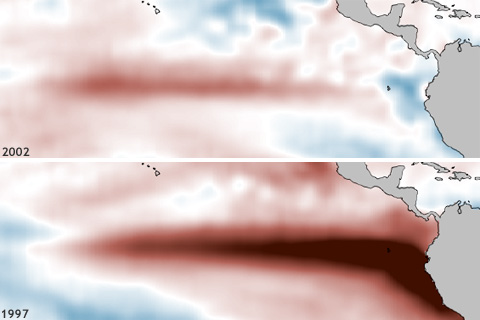
For the billions of people in Asia who depend on the Indian Monsoon for the majority of their yearly rainfall, the precise location where the Pacific warms during El Niño may be the difference between a relatively normal year and a devastating drought.
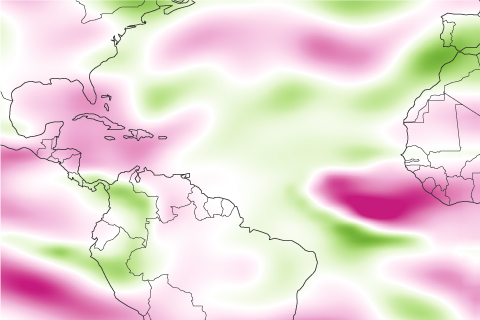
Last summer, climate conditions were primed to deliver an above-average—possibly very active—hurricane season in the Atlantic. And then...? The 2013 Atlantic Hurricane season produced the fewest number of hurricanes since 1982. What happened?