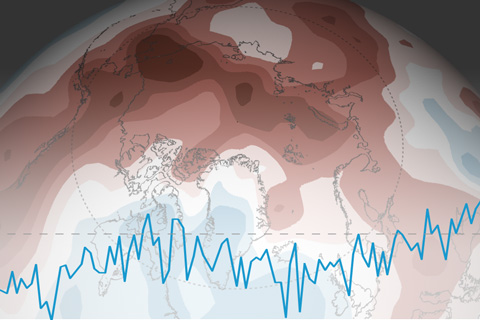
“Arctic amplification” of climate change remained in full swing in 2015, according to the 2015 Arctic Report Card. Broad areas of the Arctic were more than 5°F (3°C) warmer than average during the report card’s monitoring year (October 2014-September 2015).
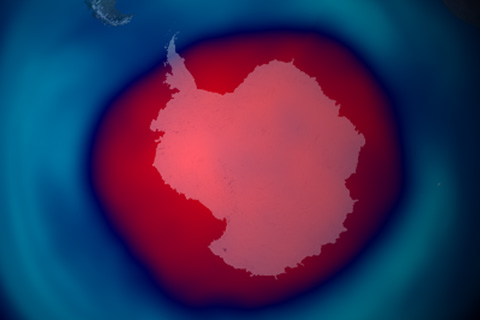
Thanks to an unusually cold winter in the Antarctic stratosphere, the 2015 ozone hole was larger than it has been in recent years.

Drought conditions remain dire in the West, boosting the U.S. total burned area to nearly 2.5 million acres.
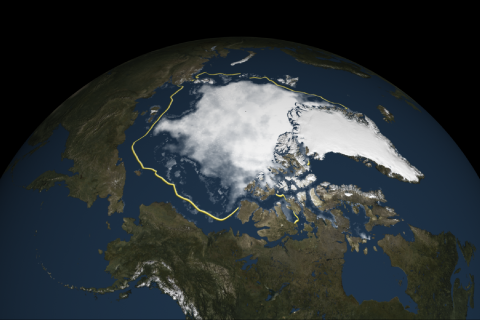
On September 11, 2015, Arctic sea reached its fourth-lowest minimum extent in the satellite record:1.70 million square miles (4.41 million square kilometers).
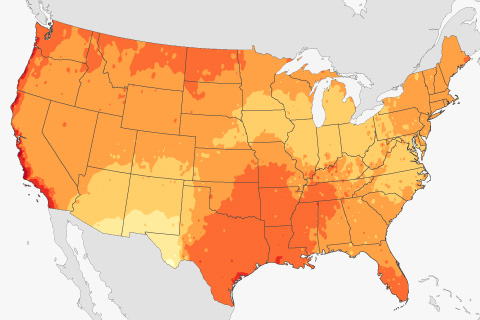
Based on observations from 1991-2020, much of the United States has its hottest day of the year by the end of July. Historically speaking, where is the warmest day likely still to come?
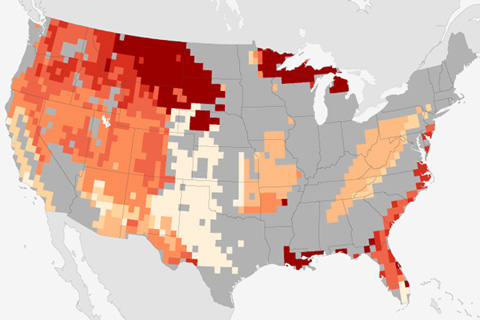
Climate change is expected to intensify fire-friendly weather conditions across the US and to lengthen the fire season.
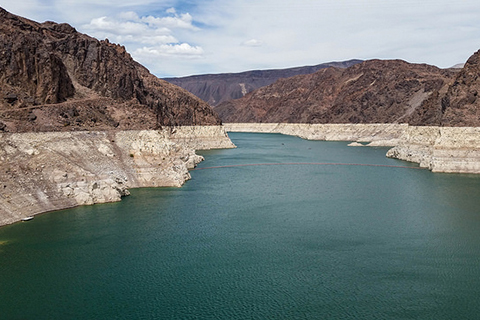
Last July, Lake Mead hit a new record low. How is the lake handling the summer so far?
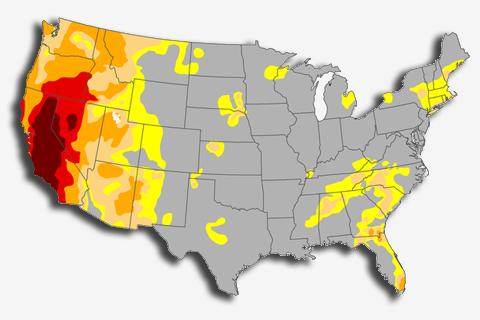
The June round of our “Climate Challenge” social media game pitted experts against players to answer the following question: What percent area of the United States will be in severe drought or worse in June 2015?
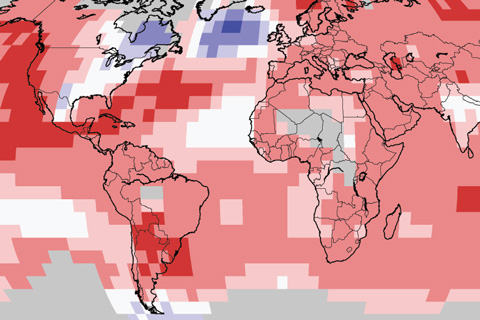
Global temperatures so far this year are record-warm. And aside from eastern North America, we were all in it together.
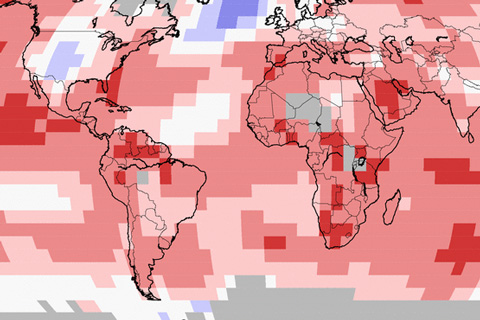
For those trying to guess the May 2015 global temperature as part of our 'Climate Challenge' game, the climate served up a new record. Nowhere was record cool, but lots of places were record warm.