The year-long MOSAiC expedition collected unprecedented environmental data from the Central Arctic Ocean. The research team has just published three overview articles on the MOSAiC atmosphere, snow and sea ice, and ocean.
A newly released video highlights how climate change is affecting marine sanctuaries, and how NOAA is addressing climate change impacts in these spectacular places.
The Resilient Rural America Project (RRAP) has launched two self-guided, no-cost training modules to build local capacity and resilience to extreme weather for rural communities across the United States.
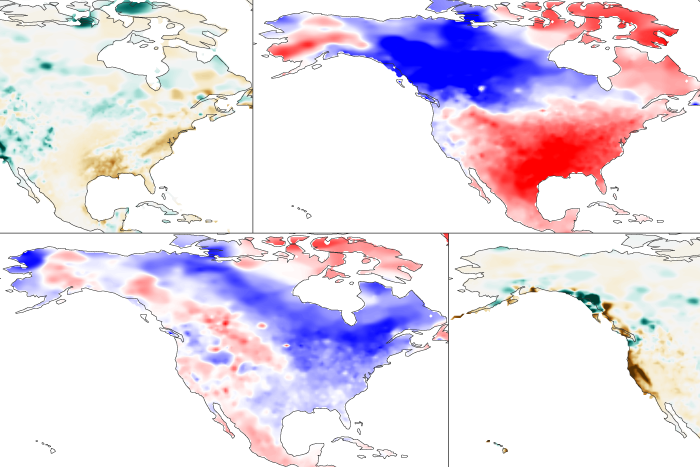
Hop in as our ENSO blogger takes you on a road trip through the February 2022 ENSO forecast.
The month brought a warm West and a cold East. Amid widespread dryness, wetter-than-average conditions occurred in Colorado, the Ohio Valley, and the Mid-Atlantic.
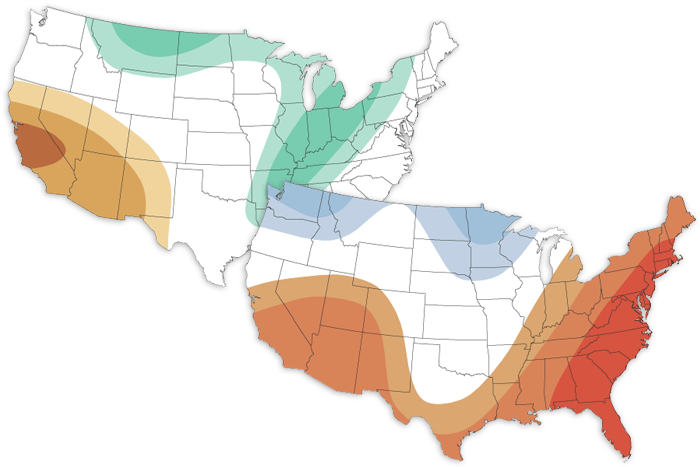
The February 2022 climate outlook favors warmer-than-average temperatures across the southern and eastern U.S., with cooler and wetter conditions favored across the north. Out West, a drier-than-average month is forecast.
Although Arctic temperature trends have been attributed largely to greenhouse gas emissions, natural variability also plays a role. New research gives scientists a better understanding of the internal variability in the Arctic system.
Besides producing a tsunami, the Tonga eruption on January 15, 2022 gave scientists a real-world experiment, sending sulfur dioxide into Earth’s stratosphere. Now scientists have a chance to see what happens next, and to improve atmospheric models.
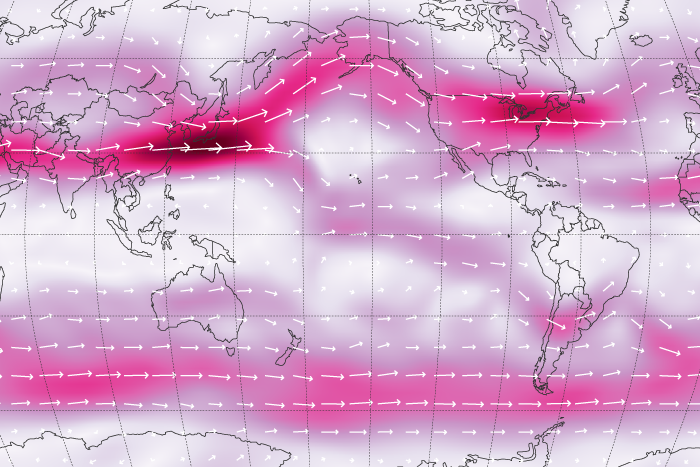
A high-level explainer of the jet stream. (Ha ha..."high-level"...get it?)
Second-highest in number and third-highest in costs, 2021 was another extreme year for weather and climate disasters in the United States.