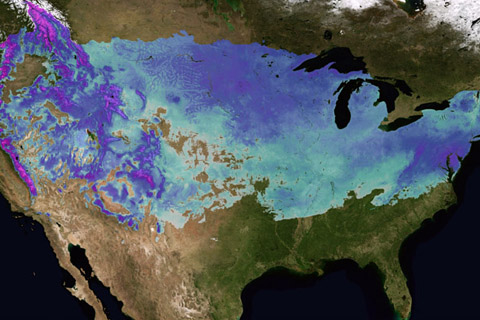
In early February, two weather systems brought record snowfalls to Washington, D.C., and other parts of the U.S. mid-Atlantic region. At the same time, organizers of the 2010 Winter Olympics in British Columbia, Canada, were dealing with a deficit of snow.
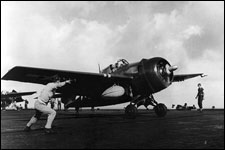
NOAA researchers have built a "time machine" for weather that provides detailed snapshots of the global atmosphere from 1891 to 2008. The system's ability to "hindcast" past weather events is emerging as a powerful new tool for detecting and quantifying climate change.
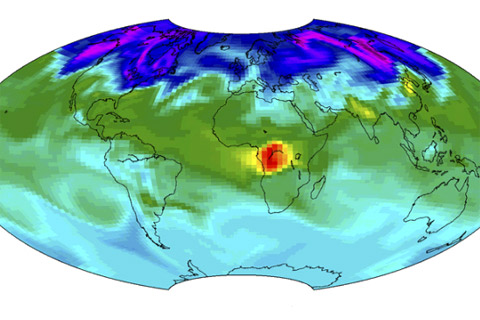
From the African savanna to North America’s boreal forests, NOAA’s CarbonTracker tool provides insight into what natural and human processes affect the uptake, release, and transport of carbon dioxide in Earth’s lower atmosphere.
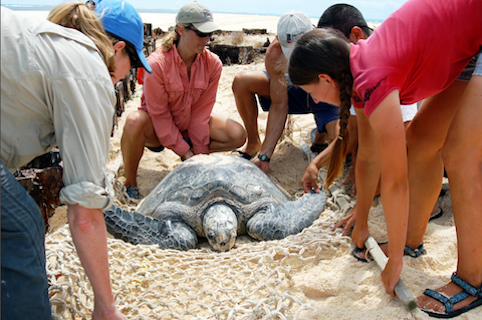
Many of the Northwestern Hawaiian islands where sea turtles nest have low, flat coastal plains. They are already vulnerable to storm surges, and they could be totally inundated as sea level rises.
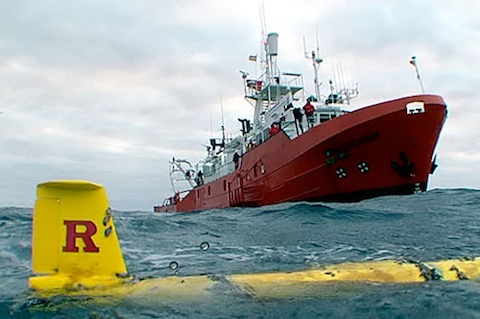
The “Scarlet Knight” becomes the first unmanned underwater glider to successfully cross the Atlantic. The technology promises to improve our understanding of the ocean and its role in climate and weather.
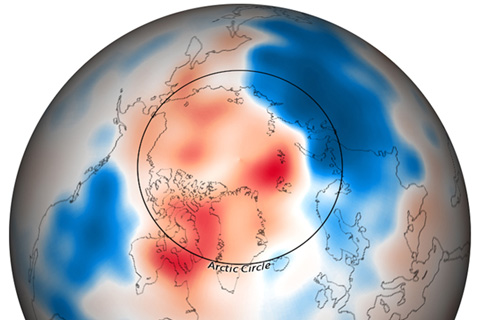
A wave of cold Arctic air gripped much of North America, Europe, and northern portions of Asia through the month of December 2009.
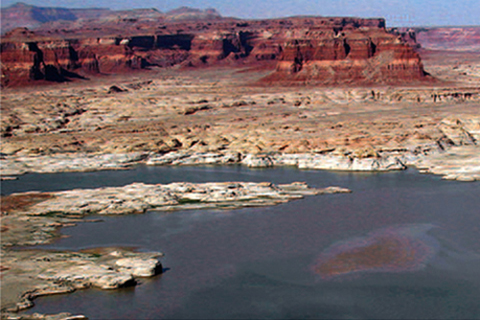
Two photographs, taken 18 months apart, show a significant decrease in Lake Powell during the most serious period of recent drought.
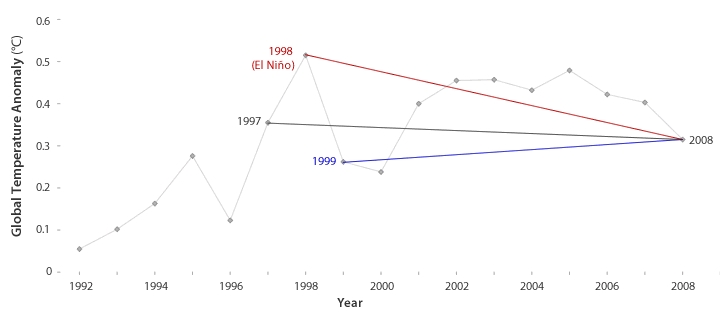
Has global warming stopped? That's what some people claim, based on global temperatures recorded since 1998. But, scientists say, not setting a new record high temperature each year doesn't mean the globe is cooling.
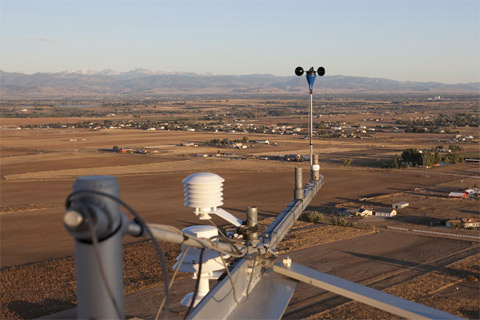
Instruments located high atop NOAA’s Boulder Atmospheric Observatory tower help scientists track carbon emissions and air quality in Colorado.