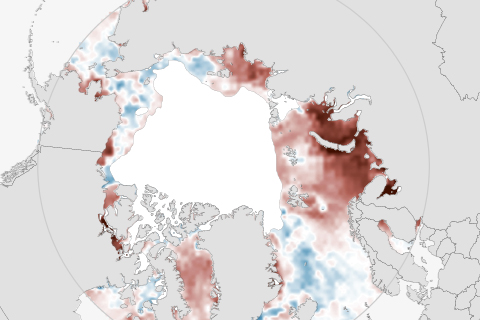
Most of the Arctic boundary waters were warmer than average in summer 2013, but a few cool pockets appeared in the western Arctic and the Greenland Sea. Warmer waters are drawing new species from lower latitudes into the Arctic.
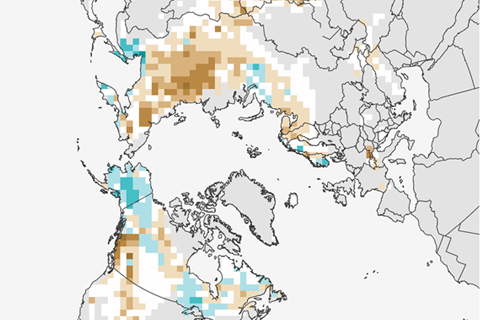
In May 2013, there was record-setting loss of Eurasian spring snow cover, and spring snow cover was below normal again in June—the fourth lowest on record. This is the sixth year in a row that Eurasia has set a new record low in either May or June snow extent.
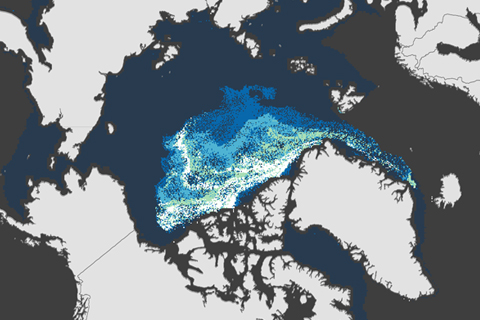
In March 1988, thick, multi-year ice comprised 26 percent of the Arctic's ice pack. In 2005, that number dropped to 19 percent. In 2013, it dropped to 7 percent.
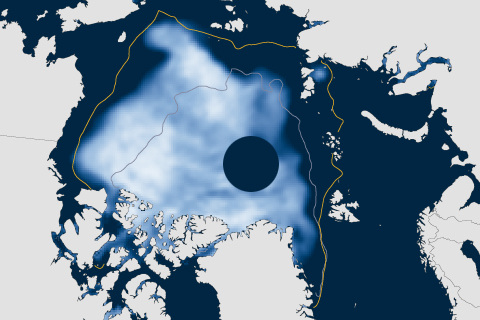
Averaged over September 2013, sea ice extent was 2.07 million square miles—larger than last year's record low, but still more than 17 percent below average and the sixth smallest September extent on record.
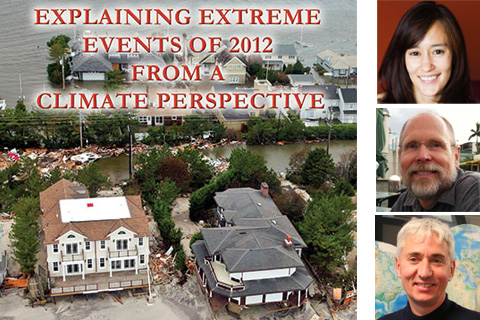
Last month, three NOAA scientists and a colleague from the United Kingdom Met Office were surprised to learn they'd be rubbing shoulders with leading international thinkers on Foreign Policy magazine's annual list of "Top 100 Global Thinkers."
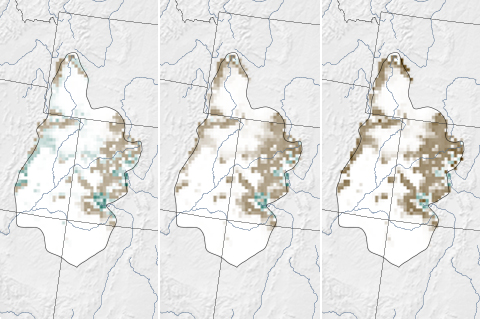
Models project that extreme dust events combined with global warming could advance the spring thaw in the mountains of the Upper Colorado River Basin by as many as 6 weeks by 2050. The earlier disappearance of snow could amplify water disputes, extend the fire season, and stress aquatic ecosystems.
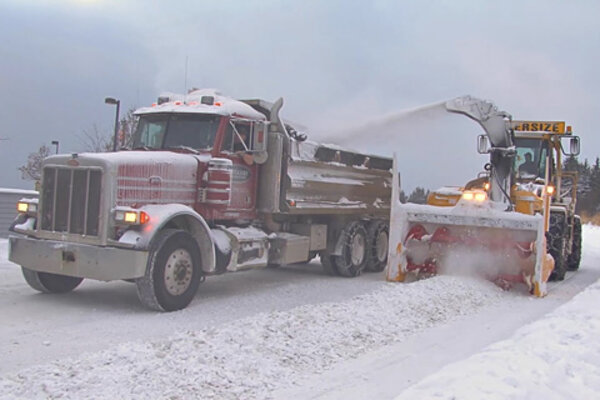
U.S. Winter Climate Outlook: 2013-14
November 20, 2013
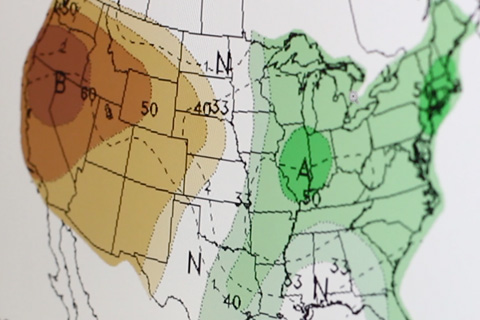
Traditional weather forecasts consist of weather maps that predict exactly how much rain may fall or the maximum daily temperature of an area. NOAA climate outlooks forecast the odds that future weather conditions will be above, below, or near normal.

The U.S. Drought Portal offers access to maps, data, and expert assessments through easy-to-use tools designed to help decision makers monitor, plan for, and recover from water shortages.
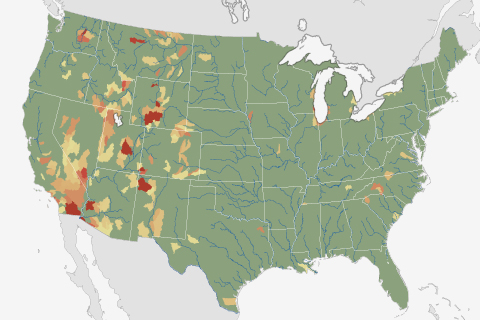
Nearly ten percent of U.S. watersheds are living beyond their means when it comes to their water supply. For nearly half the country, water stress is projected to worsen by mid-century because of climate change, according to a recent NOAA-funded analysis.