On August 7, 2022, NOAA employees and residents of Maryland’s Montgomery County participated in the National Integrated Heat Health Information System (NIHHIS) “Urban Heat Island Mapping Campaign.”
The tropical Pacific appears to be hopelessly devoted to La Niña for at least the early part of winter.
Trend expected to continue into 2023 and beyond.
On average, July is the United States hottest month of the year. But where did this July fall in the historical record? See highlights from the monthly U.S. summary from NOAA National Centers for Environmental Information.
In partnership with NOAA, Saildrone Inc. is deploying seven ocean drones to collect data from hurricanes during the 2022 hurricane, aiming to improve hurricane forecasts. For the first year, two saildrones will track hurricanes in the Gulf of Mexico.
For almost half a century, some of the most important observations of the changing Arctic climate were captured and analyzed in a cramped 960-square-foot temporary structure at the northernmost tip of the United States. Researchers have now moved into a 3,000-square foot, state-of-the-art research facility.
A team of coral researchers from NOAA and the University of Miami rescued 43 coral colonies after a sea wall collapsed at Star Island, near Miami Beach. While conducting a routine survey, NOAA scientists noticed the partially collapsed sea wall, which previously hosted dozens of coral colonies, and sprang into action.
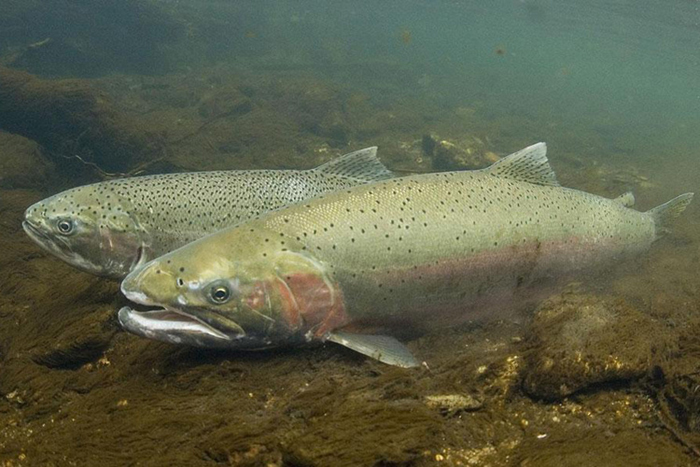
From the coasts of South America to the Galapagos Islands, the story of ENSO cannot be told without discussing its impact on marine life. But just as ENSO can affect climate patterns thousands of miles away from the equatorial Pacific, ENSO can also affect marine life. And there is no better example of this than its impacts on Salmon across the North Pacific. In this interview with expert Dr. Nate Mantua, learn all about the complexities of salmon and ENSO.
Combustion-related emissions (from motor vehicles) have historically dominated urban-center pollution. But recent air-quality research shows that those emissions are falling while non-combustion-related emissions (from solvents, paints, and hygiene products) are rising. A new field campaign in the Greater New York City Metropolitan Area aims to gather real-time data.
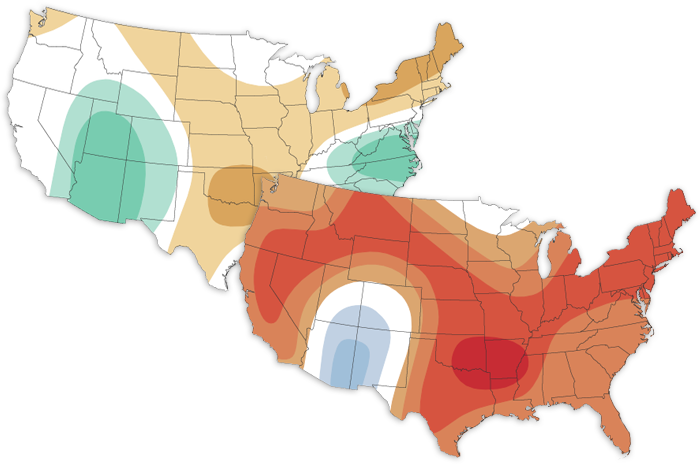
The August 2022 climate outlook favors a hotter-than-average month for much of the contiguous United States outside of the Southwest where the monsoon is expected to bring wetter and cooler-than-average conditions