The 120-day Tropical Pacific Observing System (TPOS) 2023 Saildrone Mission officially began on June 22, 2023, just after the official start of what experts suggest may be a strong El Niño.
Registration is open for the Earth's Radiation Budget Science Meeting. The meeting will be held at NCAR/UCAR's Center Green Campus in Boulder, Colorado, from November 6 to November 8, 2023.
Phytoplankton strongly influence ocean carbon storage, so scientists want to understand what affects these tiny organisms. A new study identifies solar radiation as the most important driver of phytoplankton biomass.
The August temperature outlook favors well above-average temperatures across the southern tier of the country. Above-average precipitation is favored across the middle of the country.
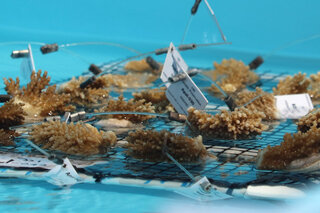
The swings between El Niño and La Niña have been bigger in recent decades than earlier ones. Our guest blogger covers new research pointing the finger at human-caused climate change.
NOAA’s National Hurricane Center has a new model to help produce hurricane forecasts this season. The Hurricane Analysis and Forecast System (HAFS) was put into operations on June 27 and will run alongside existing models for the 2023 season before replacing them as NOAA’s premier hurricane forecasting model.
A marine heatwave has spread across the Gulf of Mexico and the Caribbean with temperatures ranging between one and three degrees Celsius (~2-4.5˚F) above average. Ocean temperatures around south Florida are the warmest on record for the month of July (dating back to 1981).
Threats posed by climate change to Micronesia include hotter days and nights, stronger typhoons, sea level rise, and fishery-disrupting ocean changes. Collaborations can bolster cultural resources and resilience.
Scientists must understand how nitrogen cycles through air, soil, and plants. A new study finds that plants will uptake nitrogen at different rates depending on environmental conditions, plant species, and the type of nitrogen oxide compound.