A new mapping tool may help bring government investment back into communities that have suffered from disinvestment, such as rural communities and communities of color.
Globally, May 2023 was the third-warmest May in the 174-year NOAA record. It's virtually certain that the year 2023 will rank among the 10-warmest years on record.
On May 9, 2023, scientists aboard the NOAA Ship Ronald H. Brown arrived at their final destination in Reykjavik, Iceland following 55 days at sea, embarking from Brazil. The research team collected over 3,000 samples from the Atlantic’s surface to the seafloor, giving scientists a holistic snapshot of the Atlantic Ocean basin.
A new dataset provides river chemistry and discharge data for 140 U.S. rivers along the West, East, and Gulf of Mexico coasts, based on historical records from the U.S. Geological Survey (USGS) and the U.S. Army Corps of Engineers. This data will support regional ocean biogeochemical modeling and carbon chemistry studies.
As the base of the marine food chain, plankton connect climate and fisheries. Climate researchers predict that warming oceans will shift plankton communities, but these tiny organisms are challenging to study. A new project is developing a robust global plankton database.
Climate change presents growing threats to human health, but many health professionals need training on how best to engage with patients on climate-related issues. A new program aims to provide training.
Zooplankton contribute to the transfer of carbon from the atmosphere to the deep ocean. Better representation of their relationship with chlorophyll will improve projections of climate change impacts.
Much of the West was warmer than average in May, but the Mid-Atlantic and Southeast were cooler than average.
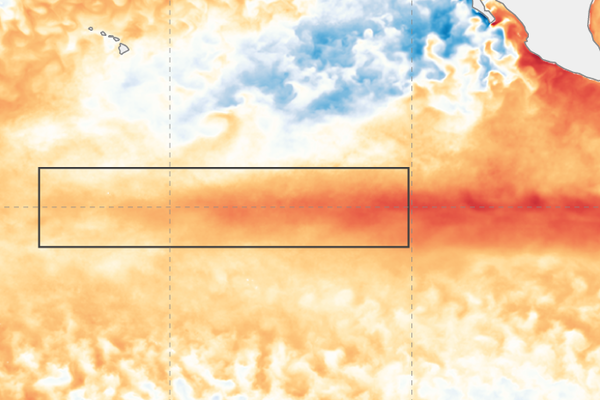
El Niño conditions are present and expected to continue into the winter. Our blogger discusses the thinking behind the forecast, including the possibility of a strong El Niño event.