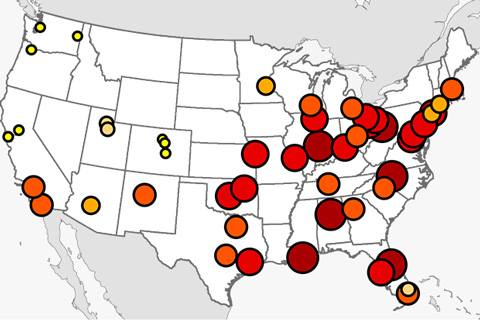
From extreme heat to infectious diseases, the impacts of human-caused global warming are a threat to human lives. According to the latest National Climate Assessment, thousands of lives could be saved in the U.S. by reducing greenhouse gases and improving resilience to climate change.

On Friday, July 19, four heat health experts answered questions in an extreme heat tweet chat hosted by Climate.gov. We've posted a transcript of their responses.

American Eunice Foote was an amateur scientist and women's rights pioneer from the mid-1800s whose experiments foreshadowed the discovery of Earth's greenhouse effect.
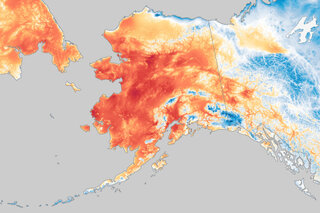
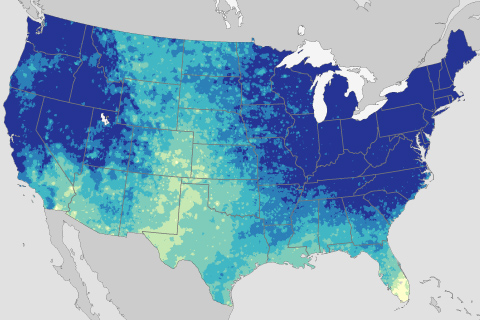
Extreme precipitation events have grown more frequent since the start of the twentieth century, and such events are likely to become even more frequent over the twenty-first.
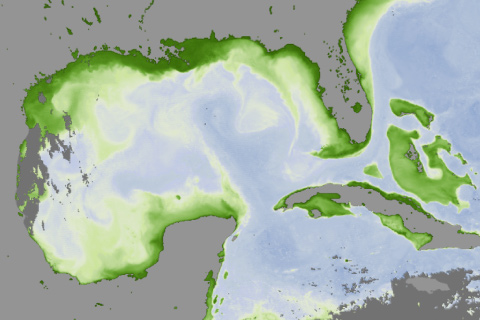
The devastating floods in the Missouri and Mississippi basins aren't the end of the problems caused by the wet spring in 2019. Fertilizer overload from high river runoff is forecast to lead to a very large dead zone in the Gulf of Mexico later this summer.
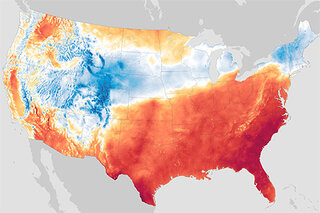
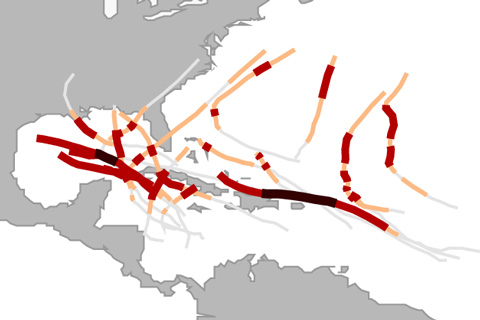
Pulled from the Fourth National Climate Assessment report published in November 2018, this FAQ explains what we know about the connection between global warming and Atlantic hurricanes.
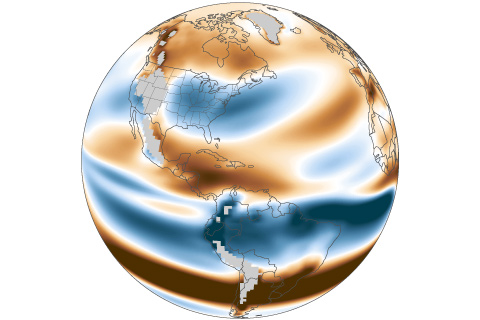
During active hurricane eras, a persistent zone of high vertical wind shear along the U.S. East Coast provides protection from rapidly intensifying hurricanes. With high emissions, that shear is projected to relax.
In North Carolina's Outer Banks, the coastal Town of Nags Head is vulnerable to flooding from heavy rain events, hurricanes, tropical storms, nor’easters, and storm surge. To add insult to injury, vulnerability is increasing with sea level rise. Town managers and residents recognized the need to build the town's resilience and moved forward to prioritize and plan.