Officially, the ocean is lagging, but the tropical atmosphere is already looking La Niña-like.
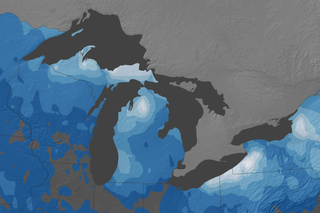
Record-breaking lake effect snow arrives as winter starts
December 11, 2024
The past decade has been the region’s warmest since at least 1900.
Scientists report that ice seals have recovered from mass mortality events in the 2010s. Body condition, pregnancy rates, and pup survival all indicate populations are doing well.
Further warming will pose increasing challenges for caribou and the people who depend on them.
Large parts of the North American Arctic had their shortest snow-covered season on record, while parts of Eurasia had a longer-than-average snow-covered season.
Among the changes, the Arctic tundra is now releasing more carbon dioxide to the atmosphere than it stores.
Summer sea ice has been stable near these much smaller extents since around 2007.
The yearly precipitation across the Arctic has increased more than 10 percent since 1951, with winter experiencing the largest seasonal increase.
The Arctic tundra, which has been a carbon sink for millennia, has shifted to become a carbon source.