Two new studies focusing on the tropical Pacific and atmospheric circulation uncover mechanisms driving extreme weather patterns and may help improve predictions.
Released in 2023, the Fifth National Climate Assessment (NCA5) includes an Art × Climate gallery. This photo of a spoonbill in South Carolina by Pamela Dechellis depicts an expansion of the birds range to the north.
Heat-driven drying is playing a larger role than low precipitation in 21st-century Western droughts.
NOAA’s Climate, Ecosystems, and Fisheries Initiative is an initiative to provide decision makers with needed information to mitigate and adapt to the effects climate change on key marine and Great Lakes resources.
The NOAA Climate Program Office (CPO) Adaptation Sciences (AdSci) program is excited to announce eight new awards totaling $2,395,476 that will build the nation’s climate resilience.
Phased Array Radar can give meteorologists a clear view of fast-moving weather systems by providing almost instantaneous scans of multiple areas in the atmosphere at once.
Released in 2023, the Fifth National Climate Assessment (NCA5) includes an Art × Climate gallery. This digital rendering of a public art installation by Carolina Aragon visualizes projected flooding due to sea level rise.
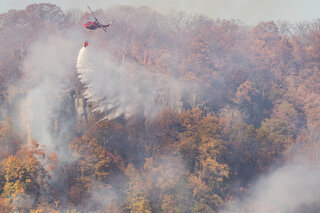
Unusual fire risk across the Northeast in fall of 2024
November 21, 2024
It was the second-warmest October for the globe, and large parts of North and South America were drier than average.
At current rates, the Global Carbon Budget estimates, there’s a 50 percent likelihood that global average air temperatures will regularly exceed the 1.5-degree Celsius target (2.7 degrees Fahrenheit) by 2031.