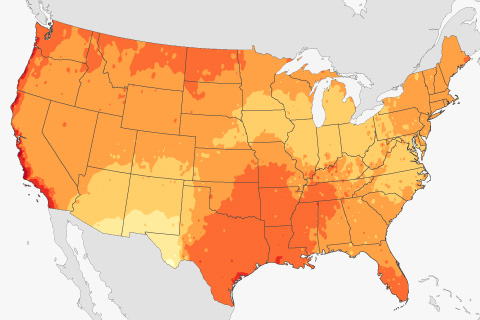
Based on observations from 1991-2020, much of the United States has its hottest day of the year by the end of July. Historically speaking, where is the warmest day likely still to come?
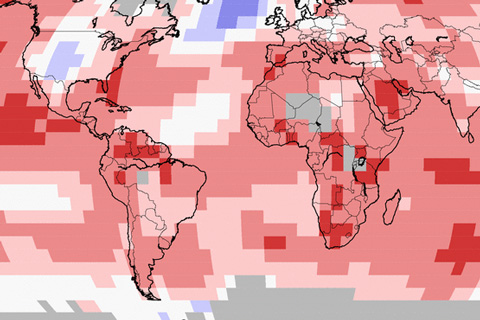
For those trying to guess the May 2015 global temperature as part of our 'Climate Challenge' game, the climate served up a new record. Nowhere was record cool, but lots of places were record warm.
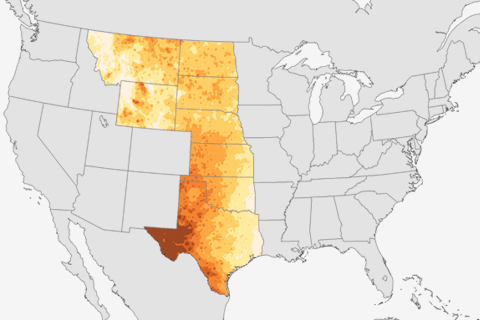
From soybeans and sunflowers in North Dakota to cotton and winter wheat in Texas, large stretches of croplands in the U.S. Great Plains rely exclusively on rain. Those croplands are likely to face longer dry spells by mid-century.
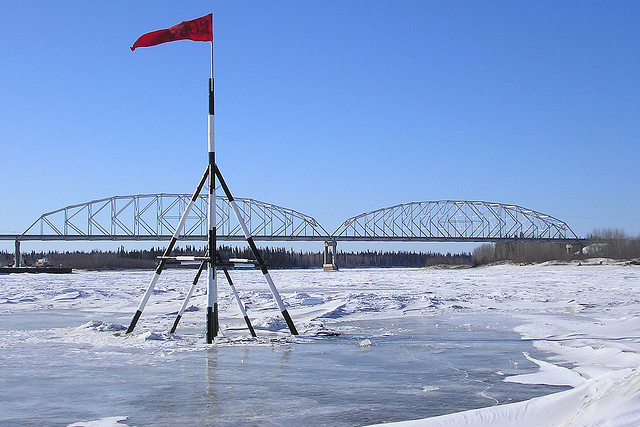
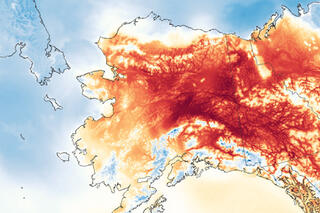
While many of us were wrapped up in March Madness this spring, Alaska residents and people across the globe participated in a different kind of competition.
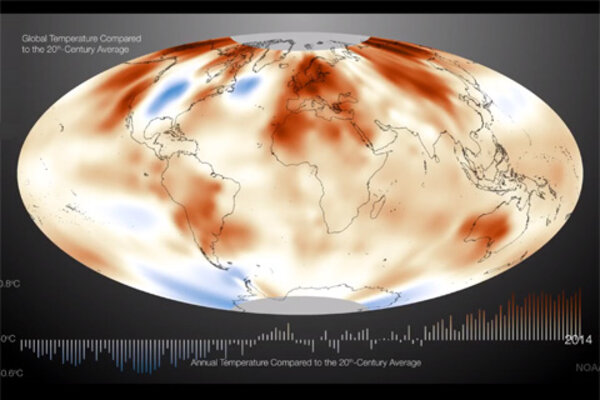
History of Earth's temperature since 1880
January 16, 2015
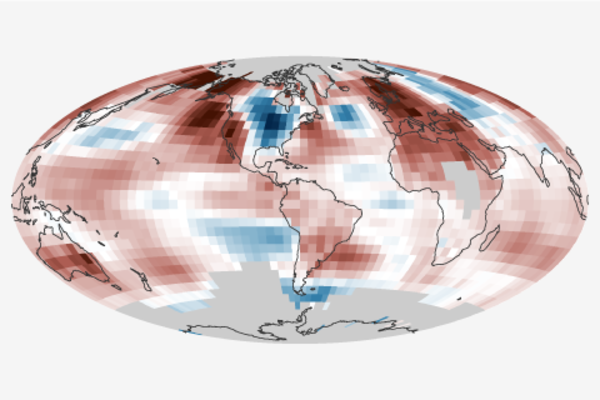
2014 Global Temperature Recap
January 15, 2015
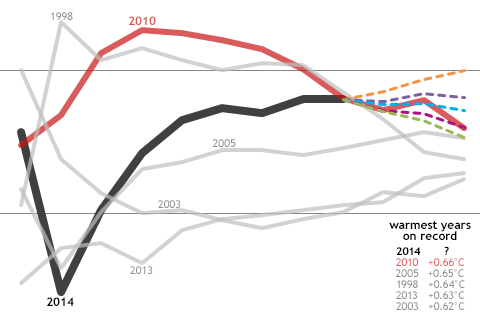
We're nine laps into the race to set a new global annual temperature record. NOAA climate scientist Deke Arndt talks about how this year's race might end--and why yearly rankings tell us less about the big picture of climate change than we might think.
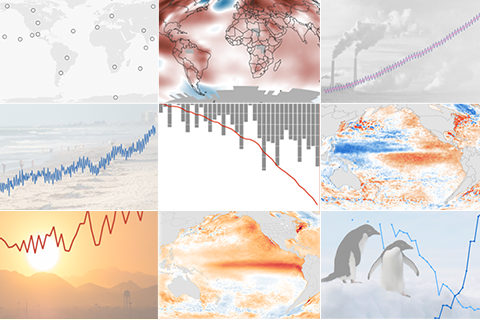
Every year hundreds of scientists from scores of countries team up to give the Earth's climate a comprehensive physical. Edited by NOAA scientists and published by the American Meteorological Society, the State of the Climate in 2015 draws on tens of thousands of observations of everything from forest fires to fish migration to catalog climate variability and change.