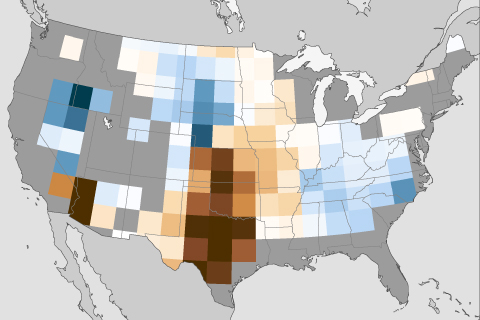
Impacts of global warming on Great Plains summer rainfall and vegetation are biggest unknowns.
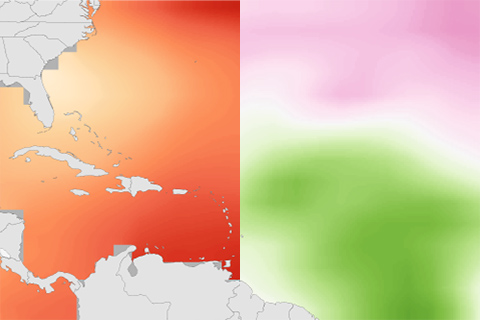
But basin-wide quiet periods favor rapid intensification of U.S. landfalling hurricanes.
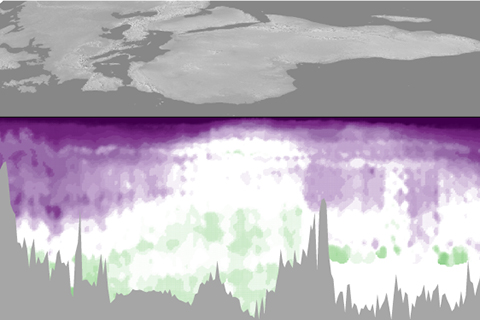
About a third of the carbon dioxide released by fossil fuel burning winds up in the global ocean. Repeat cruises help scientists understand what happens to that carbon below the water surface.
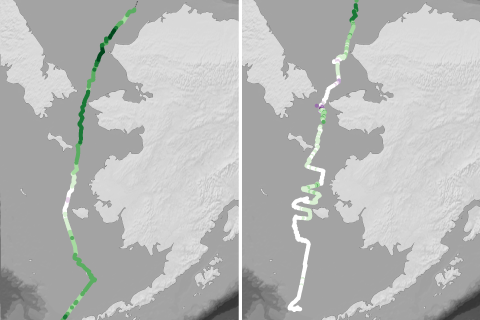
A saildrone observed the growth and decay of a bloom of ocean plants in the Alaskan Arctic in late summer 2017. Such blooms affect the rate of regional ocean acidification, which occurs as surface waters absorb human-produced carbon dioxide.
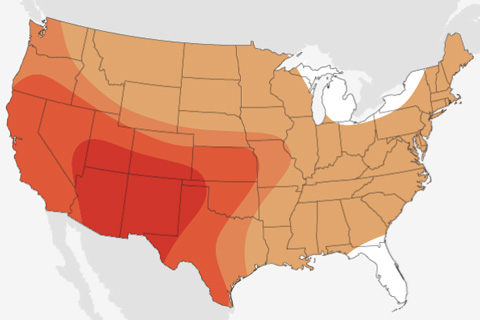
Most of the United States has better than even odds of June temperatures being in the warmest third of the 1981-2010 climate record.

This animated gif tracks the emergence and decay of La Niña in the tropical Pacific from August 2017-April 2018.
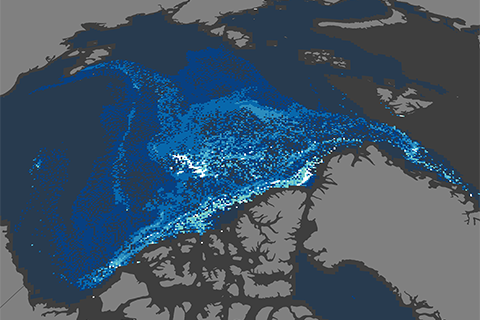
Old ice continues disappearing from the Arctic Ocean, continuing a decades-long pattern.
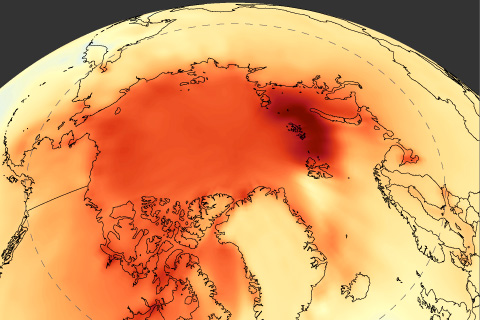
Models suggest 2016's extreme warmth may be the Arctic's new normal within a decade.
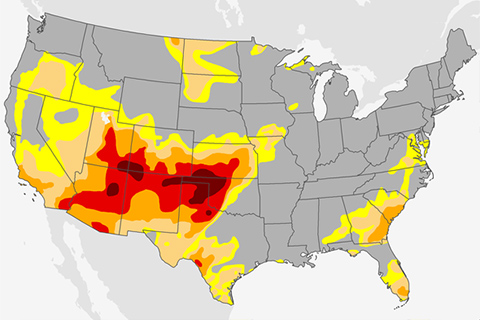
A dry winter set the stage for widespread and severe drought across the Southwest and Southern Plains.
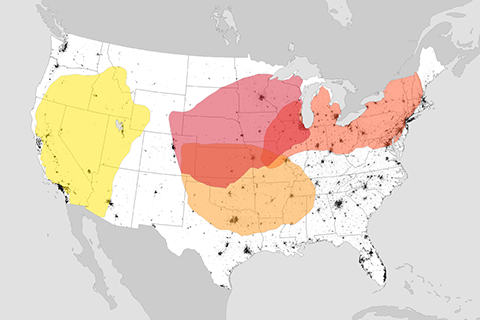
Influence of global warming on U.S. heat waves may be felt first in the West and Great Lakes regions
Global warming will make heat waves hotter, longer, and more frequent. Communities in the U.S. West and the Great Lakes region may have the least time to prepare.