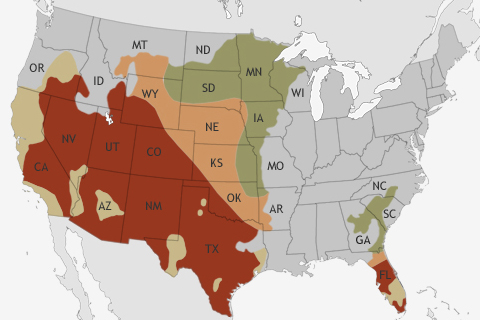
NOAA's Climate Prediction Center released its Spring Outlook on March 21. The big story for the upcoming spring? Relief for many drought-stricken areas of the United States is not likely.

Every year, 25-35 square miles of land off the coast of Louisiana—an area larger than Manhattan–disappears into the water due to a combination of subsidence (soil settling) and global sea level rise. Toggle these maps back and forth to see how much land has been lost to the Gulf of Mexico in the past 80 years.
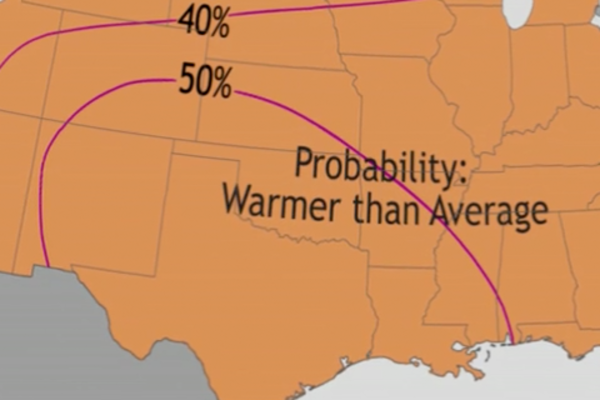
Spring 2013: Little Relief from Drought
April 1, 2013
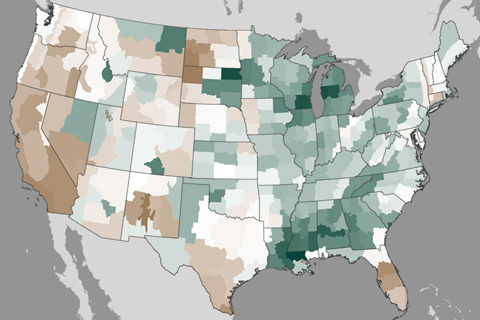
Winter storms in February improved drought in the Southeast and Midwest, but well below average precipitation in parts of the West in recent months has worsened drought in other places.
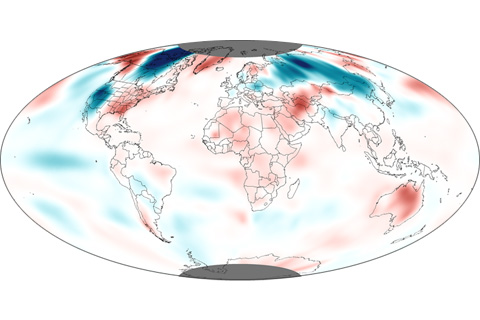
January 2013 was the 37th consecutive January and 335th consecutive month with a global temperature above the 20th-century average. The last below-average January was in 1976.
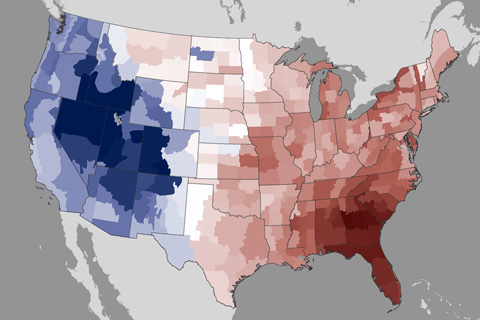
Despite several snowstorms associated with cold-air outbreaks, average January temperatures across the contiguous United States weren’t especially cold according to the latest statistics from NOAA’s National Climatic Data Center. Although the average temperature was spot-on freezing—32.0° Fahrenheit—that was still 1.6° Fahrenheit warmer than the twentieth-century January average.
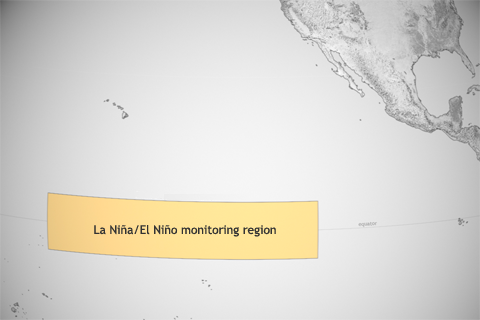
As the whole ocean gets warmer, NOAA scientists must redefine what they consider “average” temperature in the central tropical Pacific, where they keep watch for El Niño and La Niña.