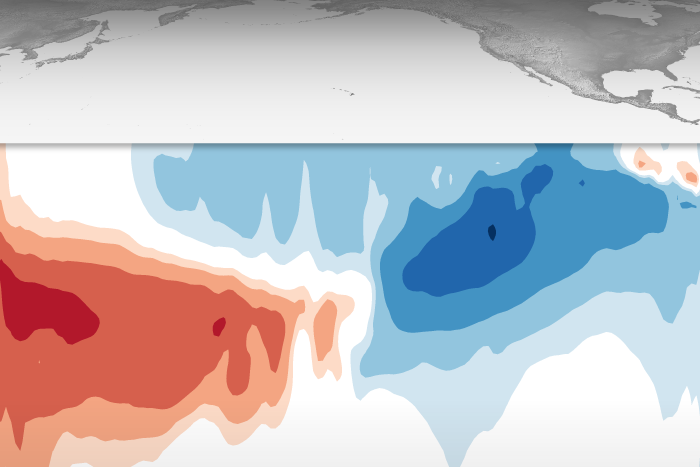
La Niña is very likely to last through the winter for the third year in a row. What might be next?
Drought extends across two-thirds of the Lower 48 U.S. states, and the Mississippi River is at its lowest levels in a decade.
New NOAA research published in the journal Geophysical Research Letters, found that hurricane intensification rates near the US Atlantic coast have increased significantly over the last 40 years and will likely continue to increase in the future.
On Monday, November 14, at COP27, a US Center event will highlight international partnerships working towards net-zero and climate resilience goals. Partners include Local2030 Islands Network and the Renewable Energy for Latin America and the Caribbean initiative.
NOAA Administrator Dr. Rick Spinrad will participate in “Partnerships to Accelerate Action to Protect Blue Carbon Ecosystems for Mitigation and Adaptation” at COP27, on Tuesday, November 15.
The National Integrated Heat Health Information System’s (NIHHIS) new heat and health portal, Heat.gov, will be displayed as a side event at the US Center, on Thursday, November 17 at COP27.
The Climate Hazard Mitigation and Planning (CHaMP) Tool is an interactive website to communicate potential vulnerabilities to residents and authorities responsible for mitigation.
A new study examines ocean heat following tropical storms and hurricanes in the Caribbean from 1991 to 2020. The study finds tropical cyclones can affect ocean heat content several days after the storm's passage, even in places not directly impacted by the storm.
A basic explainer about the international climate meeting known as “COP.”
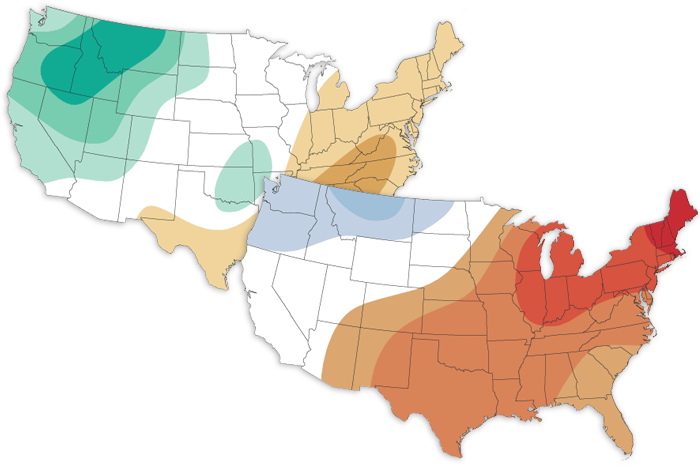
The November 2022 climate outlook favors a warmer- and drier-than-average month for the eastern United States and a cooler- and wetter-than-average month for the Northwest.