A major disruption of the stratospheric polar vortex occurred. What happens next? The stratosphere will try to communicate its artistic vision down to the troposphere, but the troposphere may have its own masterpiece in mind.
With an analogy drawn from the gym, Michelle L'Heureux explains (again!) how weather (your workout) is not climate (your fitness).
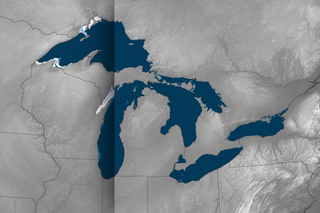
The current winter season began with very warm air temperatures, resulting in slow ice formation on the Great Lakes. January 2024 has brought a sudden drop in temperatures, with the potential for more ice.
The U.S. Department of Energy (DOE) has awarded NOAA $5 million to support the conversion of the Mauna Loa atmospheric baseline observatory in Hawaii to a net-zero carbon facility. Solar panels and battery storage systems will enable the observatory to operate on renewable energy.
Larger than Vermont, an underwater seascape of cold-water coral mounds offshore the southeast United States coast has been deemed the largest deep-sea coral reef habitat discovered to date, according to a paper recently published in the scientific journal Geomatics.
A groundbreaking new study spanning more than a decade and hundreds of miles of the Florida Coral Reef demonstrates the key role benthic communities play in reducing the impacts of climate change on coral reef ecosystems, specifically ocean acidification.
The hydroxyl radical (OH) molecule has a short lifespan but a long impact. It reacts with with harmful gases and helps clean Earth’s atmosphere. A new study examines OH changes in a warming climate.
In a record going back to 1850, Earth hasn't had a year colder than the 20th-century average since 1976—almost half a century.
The latest forecast says a major disruption of the polar vortex is on its way, but the stratosphere has been acting up for a while. Our bloggers explain what it might mean for U.S. weather.