After racing around the pole for the last several months, the polar vortex is ready for a break. Will this break be temporary, or is it done for the season? Read on to find out.
Accurately predicting seasonal changes in coastal sea levels is crucial for managing flood risks, yet current model limitations present challenges.
Heat and humidity worsen urban air pollution. That is just one of many new findings emerging from a batch of recent studies on urban air quality.
The March outlook favors a La Niña-like precipitation pattern and mild temperatures across much of the country.
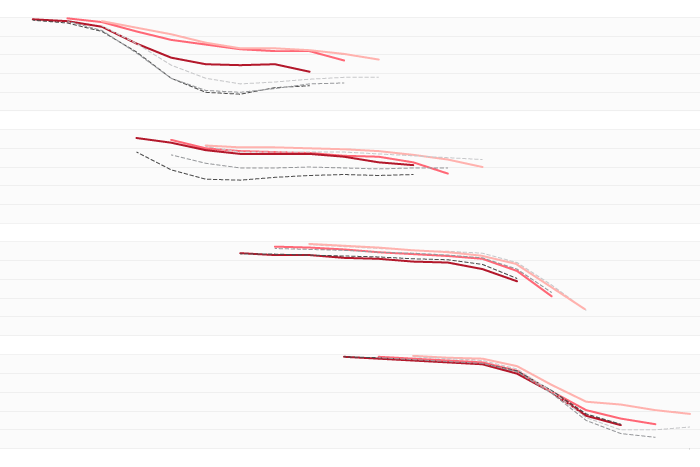
A new paper looked at 20 years work of real-time ENSO Model forecasts and found some interesting patterns. Did you know models found it pretty freaking hard to predict the onset of La Nina events?
Released in 2023, the Fifth National Climate Assessment (NCA5)'s Art × Climate gallery encourages people to engage with climate in a new way. This work by Diane Burke captures changes in Grinnell Glacier.
Temperatures were above average over much of the globe, but much below average over the United States, Greenland and far eastern Russia. Arctic sea ice extent was below average, ranking second lowest on record.
Even in years with record-breaking fire seasons, overall fire occurrence remains below historical levels, but fire severity has increased, contributing to greater forest loss and heightened risk.
NOAA has released a new report on Southwest livestock producers’ experience with the Livestock Forage Disaster Plan.
New research combines ocean and climate data with computer models to understand how two different types of Atlantic Niño form.