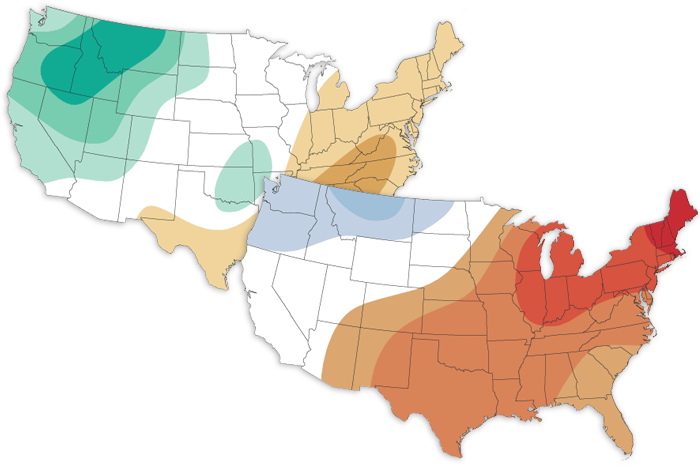
The November 2022 climate outlook favors a warmer- and drier-than-average month for the eastern United States and a cooler- and wetter-than-average month for the Northwest.
Three experts explain why La Niña provides no relief from the excess planetary heating due to rising greenhouse gases.
Call it what you like—triple-dip, three-peat, three-bean salad—we are facing the third La Niña winter in a row.
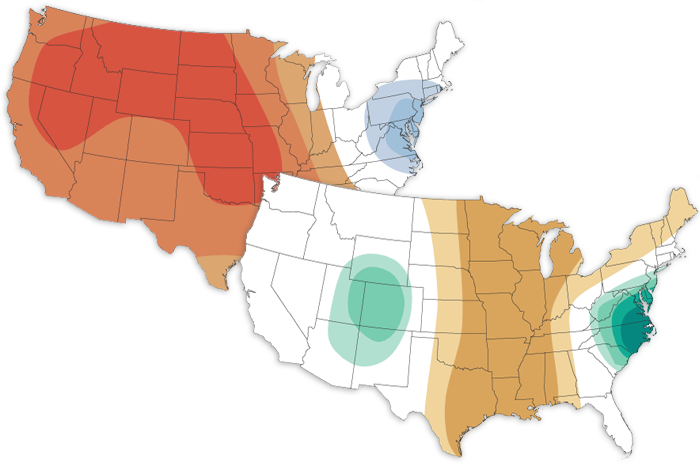
It's October. So in addition to talk of ghouls and goblins, we must chat about the October 2022 climate outlook. The outlook favors a hotter-than-average month for the western and central United States, and a colder- and wetter-than-average month for the Mid-Atlantic.
It's all but a done deal: odds of La Niña this winter are higher than 90 percent. Plus a reminder list of why we care so much about La Niña.
Global surface temperature was among the 6 warmest years on record, despite a "double-dip" La Niña event that chilled the Pacific much of the year.
For summer heat in Texas, whether it's La NIña now is less important than whether it was La Niña the previous winter.
Earth had its sixth-warmest July on record, with extreme dryness over Europe, the U.S. West, western Australia, and central South America, and extreme wetness over eastern Australia, east-central Africa, and parts of the Middle East.
The tropical Pacific appears to be hopelessly devoted to La Niña for at least the early part of winter.
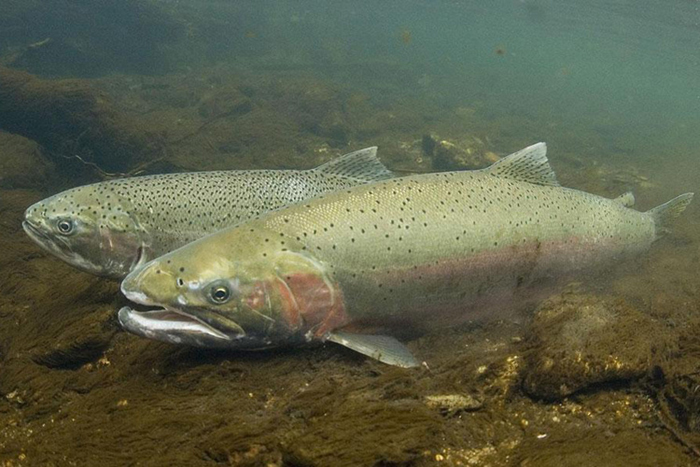
From the coasts of South America to the Galapagos Islands, the story of ENSO cannot be told without discussing its impact on marine life. But just as ENSO can affect climate patterns thousands of miles away from the equatorial Pacific, ENSO can also affect marine life. And there is no better example of this than its impacts on Salmon across the North Pacific. In this interview with expert Dr. Nate Mantua, learn all about the complexities of salmon and ENSO.