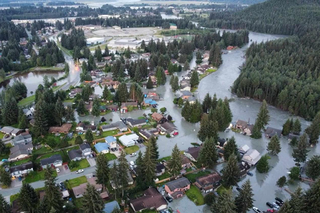
Record precipitation, tornadoes, hurricanes, and wildfires impacted the U.S.; four new billion-dollar weather and climate disasters were confirmed in July.
The dog days of summer have slowed down La Niña's arrival, but odds are still high for an event by fall.
Nitrogen fertilizer usage has helped feed nearly half the global population. But nitrogen emissions to the atmosphere have contributed to acid rain, air pollution, stratospheric ozone depletion, and the radiative forcing underlying climate change.
NOAA and India team up to create life-saving tropical cyclone forecast model for nation of a billion
A 12-year collaboration between NOAA and the Indian Ministry of Earth Sciences paves the way for advances in severe weather modeling and may lead to improved tropical cyclone forecasts.
One process driving the North Pacific's trajectory into uncharted waters is rising greenhouse gas concentrations in the atmosphere. Those rising concentrations are driving more heat into the ocean's surface layer.
Clouds produced by some wildfires can send black carbon high into the atmosphere, where it can linger for months. Black carbon particles with thicker coatings of other materials absorb more light, potentially doubling their warming effect.
Dry air plays a surprisingly important role in these heatwaves by suppressing upward movement of warm, moist air, a process that usually cools the surface.
A new study finds 2023’s record-breaking temperatures came from a mix of ongoing global warming and natural climate variability, including transition from cooler La Niña conditions to warmer El Niño conditions.
Warmer-than-normal conditions are favored across the U.S. for the last month of meteorological summer. Rain in the East could alleviate drought.